How safe is it to jump with a parachute?
Updated on September 19, 2026 · 11 min read

Skydiving is always safer!
The idea of jumping out of a plane thousands of metres above the ground may seem intimidating at first, but for many people it represents an extraordinary and unforgettable experience.
Let's find out together what makes skydiving safe and how a jump works, step by step.
Ready to jump? Book your tandem with no advance payment.
Book nowAccording to the latest data from the United States Parachute Association (USPA), the fatality rate is at an all-time low: just 0.004 per 1,000 jumps in 2020. This represents half the rate seen in the 1970s, a result that reflects extraordinary advances in technology and safety protocols.
Skydiving, when practised at a flight school with experienced and qualified instructors, can be considered a surprisingly safe activity. As with any sport or aerial activity, there is an element of risk that, however minimal, cannot be completely eliminated.
However, precisely because it is an extreme sport, some of the most rigorous safety standards in the world are adopted, along with the use of state-of-the-art equipment that undergoes regular and rigorous checks. This approach significantly helps minimise risks, making the experience safer than you might imagine.
Did you know that at our Skydiving Academy, located near Milan, we make this thrill a reality, guaranteeing a safe, adrenaline-filled experience?
Let's now look in detail at how this adrenaline-filled and unique experience works. We'll go step by step through a tandem parachute jump.
How does a tandem skydive work?
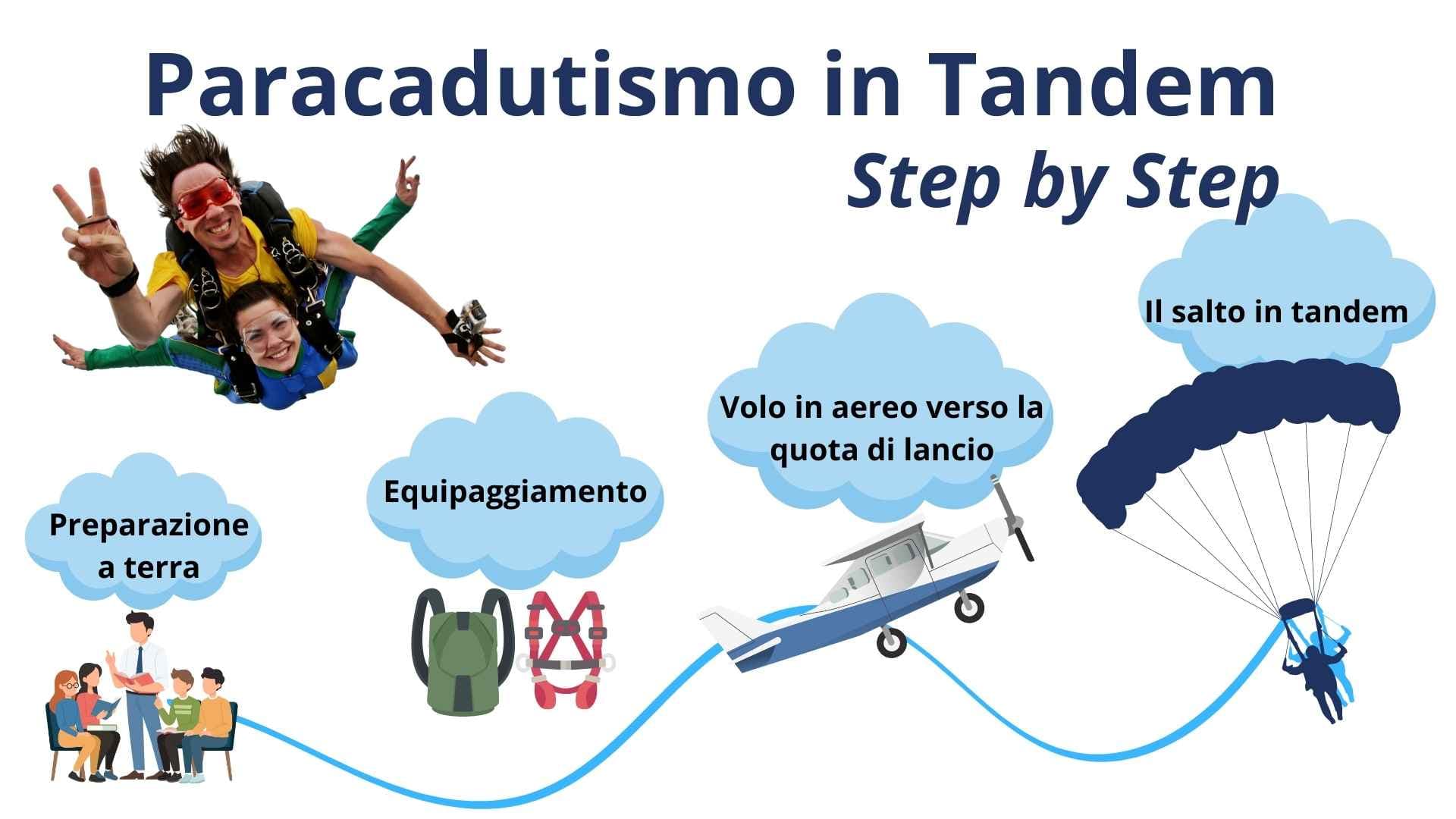
Step by step through the tandem jump experience
Tandem skydiving is a skydiving experience in which two people jump from a plane together, tethered to each other for the entire minute of the fall. The connecting straps keep one person floating.
A tandem jump is the perfect experience for those new to skydiving. Led by an experienced instructor, you can enjoy a safe, exciting and unforgettable adventure.
The jump has four phases. Briefing and kitting up on the ground: you learn the body positions for free fall and landing, and your instructor checks every detail of the equipment. The climb: around 25 minutes to reach 4,200 metres — the jump altitude, and the reasons behind it, are explained in what altitude you skydive from — with the view opening up metre after metre. Free fall: about 50-60 seconds at a speed that settles at around 200 km/h, as covered in our guide on how long free fall lasts and how fast you go. Opening and landing: at around 1,500 metres the instructor deploys the parachute and 5-10 minutes of canopy flight begin, ending in a gentle, guided descent. The full account of every phase is in the tandem skydiving guide.
Who can experience the thrill of tandem skydiving?
Tandem skydiving is perfect for those who want to experience the adrenaline rush of skydiving without having to take courses or obtain certification. Securely connected to an experienced instructor, you can focus solely on the experience, leaving the technical and safety aspects to them.
Suitable for anyone in good health, this type of jump is not only a unique adventure, but also the ideal starting point for those who dream of taking a more advanced path in the world of skydiving.
Minimum age: you must be at least 16 years old to skydive, while there is no upper age limit — what matters is physical fitness and general health. Requirements, paperwork and special cases are covered in the guide on the minimum age for skydiving.
How safe is it to skydive?
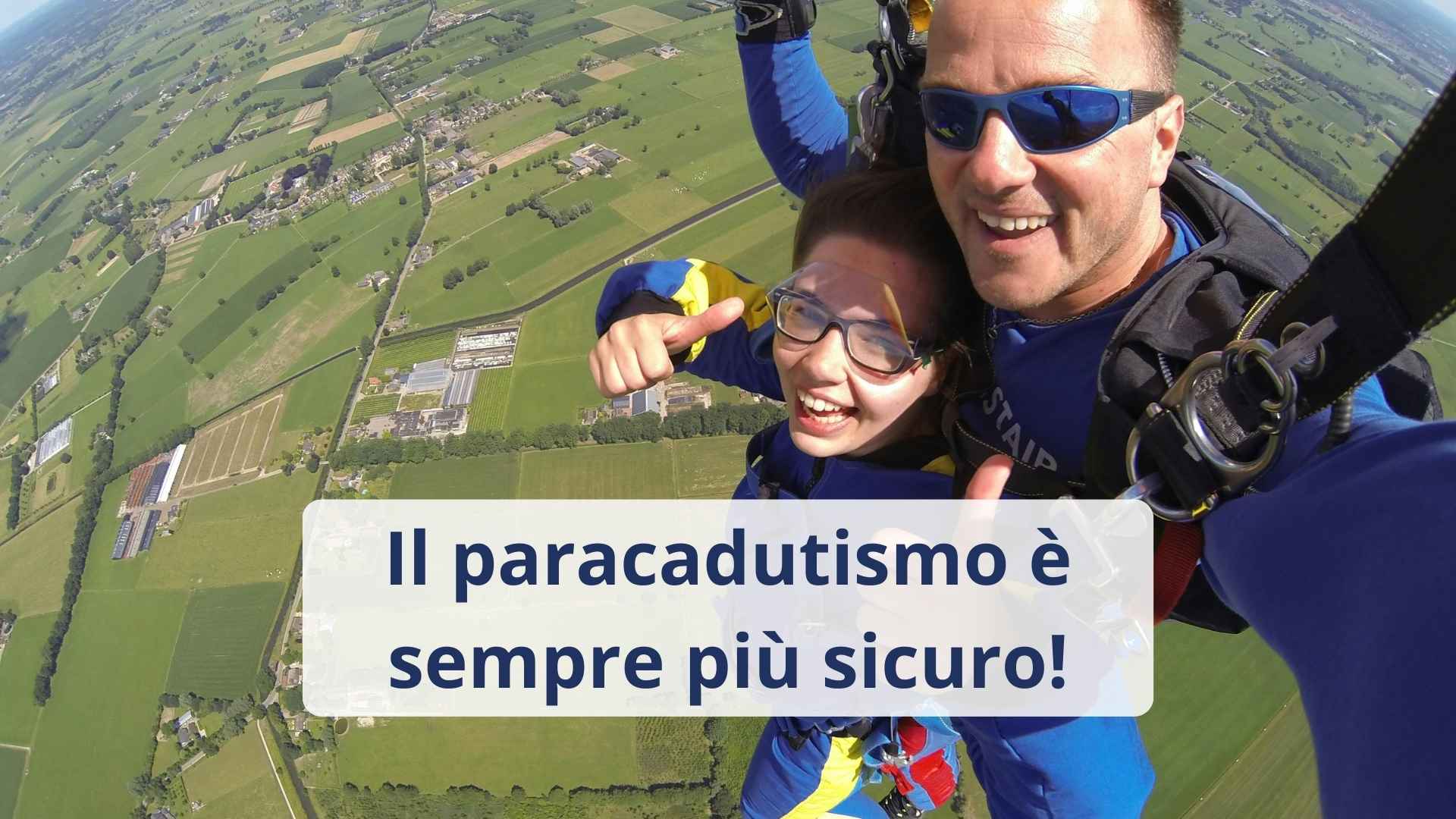
Skydiving is an increasingly safe sport thanks to the high safety standards adopted.
Safety standards: the equipment undergoes rigorous inspections and periodic maintenance. Each jump is planned down to the smallest detail. The equipment is checked and maintained regularly.
Tandem jumping and the instructors' experience: the instructors who lead tandem jumps have hundreds, if not thousands, of jumps under their belt.
For example, Luca, one of our instructors at the Accademia di Paracadutismo, has exceeded 20,000 jumps, always offering maximum competence and peace of mind to participants.
Full support: during a tandem jump, you're securely connected to the instructor, who manages every technical and safety aspect. This minimises risk, making the jump a safe and enjoyable experience.
Probability that the parachute will not open: data shows that this event is extremely rare. Furthermore, each parachute is equipped with a reserve system that opens automatically in an emergency.
What happens if the parachute doesn't open?
The most common question has a precise technical answer: a jump never depends on a single parachute. Every rig carries two independent canopies — the main and the reserve — plus an automatic device that fires on its own if nobody deploys by a certain altitude. On a tandem jump you also have a professional instructor handling every phase for you.
The opening sequence, step by step
- Exit and free fall. After leaving the aircraft the speed settles at around 200 km/h, leaving roughly 50-60 seconds of free fall.
- Deployment at around 1,500 metres. The instructor throws the pilot chute, which pulls the main canopy out of the container: the canopy inflates and the descent rate drops within seconds.
- Canopy check. As soon as it is open, the instructor checks that the canopy is intact, symmetrical and steerable. This check is part of the standard procedure on every single jump.
- If the main is not usable. The instructor cuts it away and deploys the reserve: a drilled, rehearsed manoeuvre, with a canopy packed and certified by a qualified rigger.
- If nobody acts. The automatic device reads altitude and descent rate and fires the reserve by itself, with no human input at all.
The instructor's role. On a tandem jump you have nothing to remember and nothing to deploy: opening, canopy check, any emergency procedure and the landing are all the instructor's job — someone with thousands of jumps who repeats that sequence every flying day.
The four elements of the safety system
| Element | What it does |
|---|---|
| Main canopy | The parachute that opens at around 1,500 metres and flies the whole descent down to the landing. |
| Reserve canopy | The second parachute, fully independent from the first, packed and periodically certified by a qualified rigger. |
| Automatic device (AAD) | A computer that measures altitude and descent rate and fires the reserve automatically if nobody else does. It is mandatory on all modern rigs. |
| Instructor | On a tandem it is the instructor who handles exit, deployment, canopy check and any emergency: the passenger carries no technical responsibility. |
A parachute is an aerodynamic device designed to counteract the velocity of a free-falling body. The structure consists of a braking canopy, connected by a series of cords to a harness worn by the skydiver. The canopy is contained in a backpack-like containment bag that also houses the main deployment system and safety devices, including a reserve parachute and an automatic deployment mechanism in case of emergency.
In practice, for a jump to go wrong you would need two independent canopies, an automatic device and a professional instructor to fail at the same moment. It is that redundancy — not luck — that makes modern skydiving a far more controlled activity than it looks from the outside.
What happens if a skydiver faints?
Another common concern is the possibility of a person losing consciousness during the jump.
In tandem
If a passenger faints, the instructor is fully trained to handle the situation. Being connected to the passenger, they can complete the jump safely, controlling both the free fall and the parachute opening.
Automatic systems
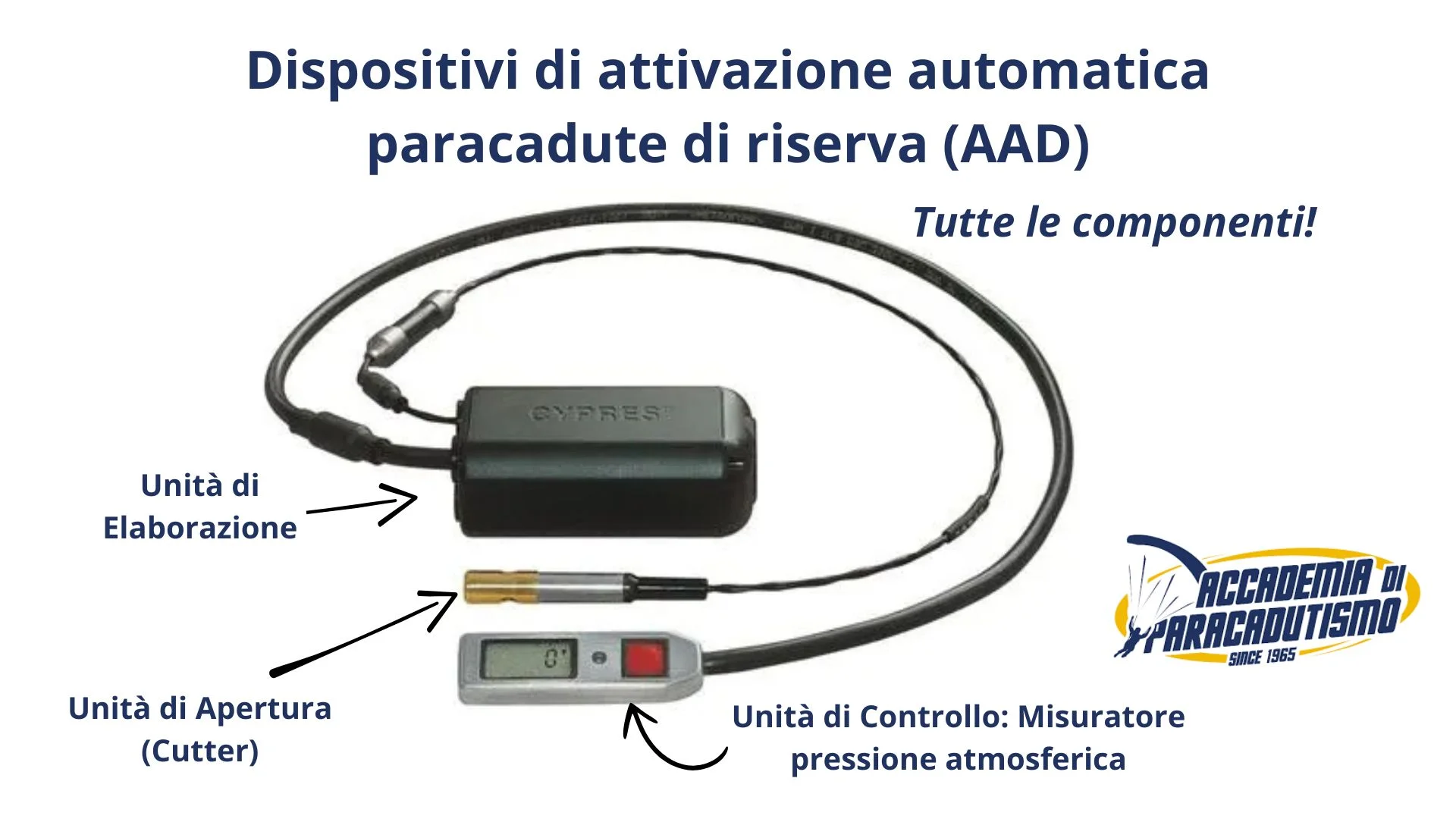
Even in a solo jump, the AAD springs into action, opening the reserve parachute at the right moment, ensuring that the jump is completed without incident.
How to overcome the fear of parachuting?
It's normal to feel anxious before a jump. If what holds you back is mainly the void itself, you'll find a dedicated path in overcoming the fear of heights, vertigo and acrophobia. Either way, there are practical ways to deal with this fear:
- Understanding the origin of fear: fear of skydiving often stems from the unknown. Knowing every step of the jump can help you feel more confident.
- Mental preparation: the instructors are trained to guide you step by step, providing you with all the support you need to face the experience with serenity.
- Focus on the experience: once in free fall, the adrenaline and the beauty of the panorama will make you forget all your fears.
In conclusion, skydiving is now a safe activity thanks to high technological standards, trained instructors, and rigorous safety regulations. For those seeking thrills and adrenaline in complete safety, there's no better experience than a tandem jump!
Ready for an unforgettable experience? Book your jump at the Accademia di Paracadutismo and discover the thrill of flying in complete safety!
Why choose the Accademia di Paracadutismo?
Jumping with the Accademia di Paracadutismo means enjoying a unique, exciting and safe experience just outside Milan. That's why we're the ideal choice for your first jump or to perfect your passion:
A team of experts!
With over 56,482 tandem jumps completed and instructors boasting over 36,892 flight hours, we are proud to offer you the highest level of training. Our AFF-certified staff will guide you step by step, from the initial briefing to the final descent, ensuring professionalism and peace of mind at all times.
An unforgettable experience
- Breathtaking views: after a briefing with our experts, board a 20-minute scenic flight, where you can admire the extraordinary landscapes of Piedmont and Lombardy.
- Pure adrenaline: experience freefall at 200 km/h for about 50 seconds, followed by a 10-minute glide, a perfect mix of excitement and relaxation.
- Total safety: all the equipment is state-of-the-art and undergoes regular checks, ensuring the highest safety standards for every jump.
Exclusive services
- Instant confirmation: book in just a few clicks, even via WhatsApp.
- Free rescheduling: no problem in case of bad weather, you can reschedule your jump at no additional cost.
- SSD membership included: jump without worries, everything is included in the price.
Where are we?
We're located in Casale Monferrato, in Piedmont, a strategic location just an hour from Milan, Turin and Genoa. Perfect for an adrenaline-filled day trip!
Fly with us, push your limits, and create unforgettable memories. Your jump awaits! 🌟
Frequently asked questions
- Is it safe to do a tandem skydive?
- Yes, tandem skydiving is very safe. The instructors are highly qualified and use high-quality equipment that is regularly inspected and maintained. Safety is our absolute priority.
- Is it possible that the parachute does not open?
- A jump never depends on a single parachute: alongside the main canopy every rig carries an independent reserve and an automatic device that fires it if nobody acts. On a tandem, the instructor handles deployment and any emergency. The full sequence is explained in the “What happens if the parachute doesn't open?” section above.
- At what altitude does the parachute open?
- On a tandem jump the parachute opens at around 1,500 metres, after roughly 50-60 seconds of free fall from 4,200 metres. From that point you get 5-10 minutes of canopy flight down to the landing.
- What is an automatic activation device (AAD)?
- It is a small computer inside the container that continuously measures altitude and descent rate: if it detects that you are falling too fast below a safety altitude, it deploys the reserve parachute by itself. It is mandatory on all modern rigs and requires nothing from you.
- What happens if a skydiver faints during the jump?
- In tandem, the instructor is connected to you and trained to complete the jump safely. Even in a solo jump, the AAD automatically opens the reserve parachute at the right moment.
- What is the minimum age for skydiving?
- To do a parachute jump you must be at least 16 years old. There is no maximum age: what matters most is good physical and mental fitness.
- Can you breathe during free fall?
- Absolutely yes: there is plenty of air and you breathe normally throughout the entire jump.
- How much does a parachute jump cost?
- With us the price is 180 € on weekdays and 200 € at weekends, not counting the optional cost of video and photos. You can find all the details on the prices page.
- What happens in case of bad weather?
- In case of bad weather, don't worry: our policy allows you to postpone your booking to a new date, in line with your work and personal commitments.
- Do you need training or experience to do a tandem jump?
- No. A tandem jump requires no courses and no certification: you are attached to an instructor who handles every technical and safety aspect. You simply need to be in good health and at least 16 years old.
- How long does the whole experience at the drop zone take?
- Allow 2-3 hours in total: welcome and briefing on the ground, around 25 minutes of climb to 4,200 metres, 50-60 seconds of free fall and 5-10 minutes of canopy flight. The times in the air are detailed in how long free fall lasts and how fast you go.
Ready for your tandem jump?
Free, flexible booking with no advance payment. Over 400 five-star reviews.
Useful resources
Keep reading
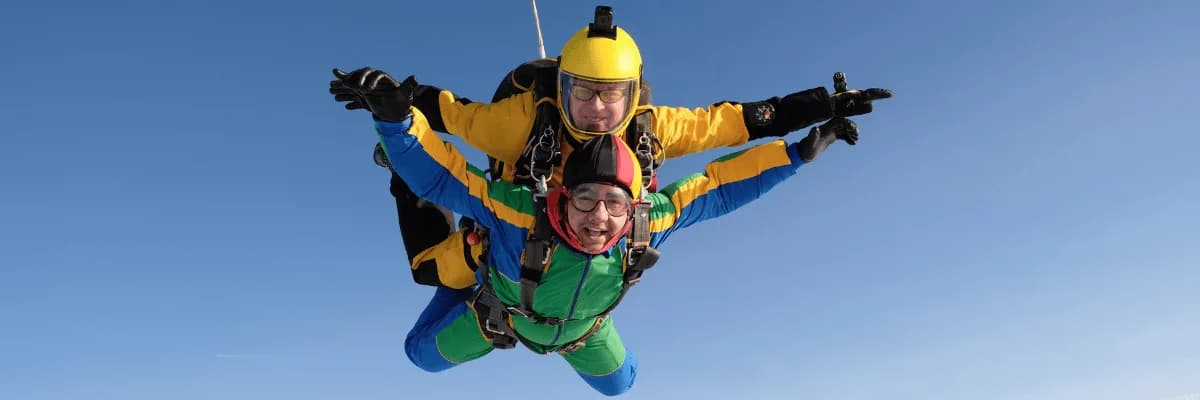
Guides
Preparing for your first tandem jump: Skydiving Guide
If you're thinking about trying skydiving for the first time, a tandem jump is the perfect option to experience the thrill in total safety. In this guide, we'll explain how to best prepare, what to expect, and how to turn this experience into an unforgettable memory.
Read the article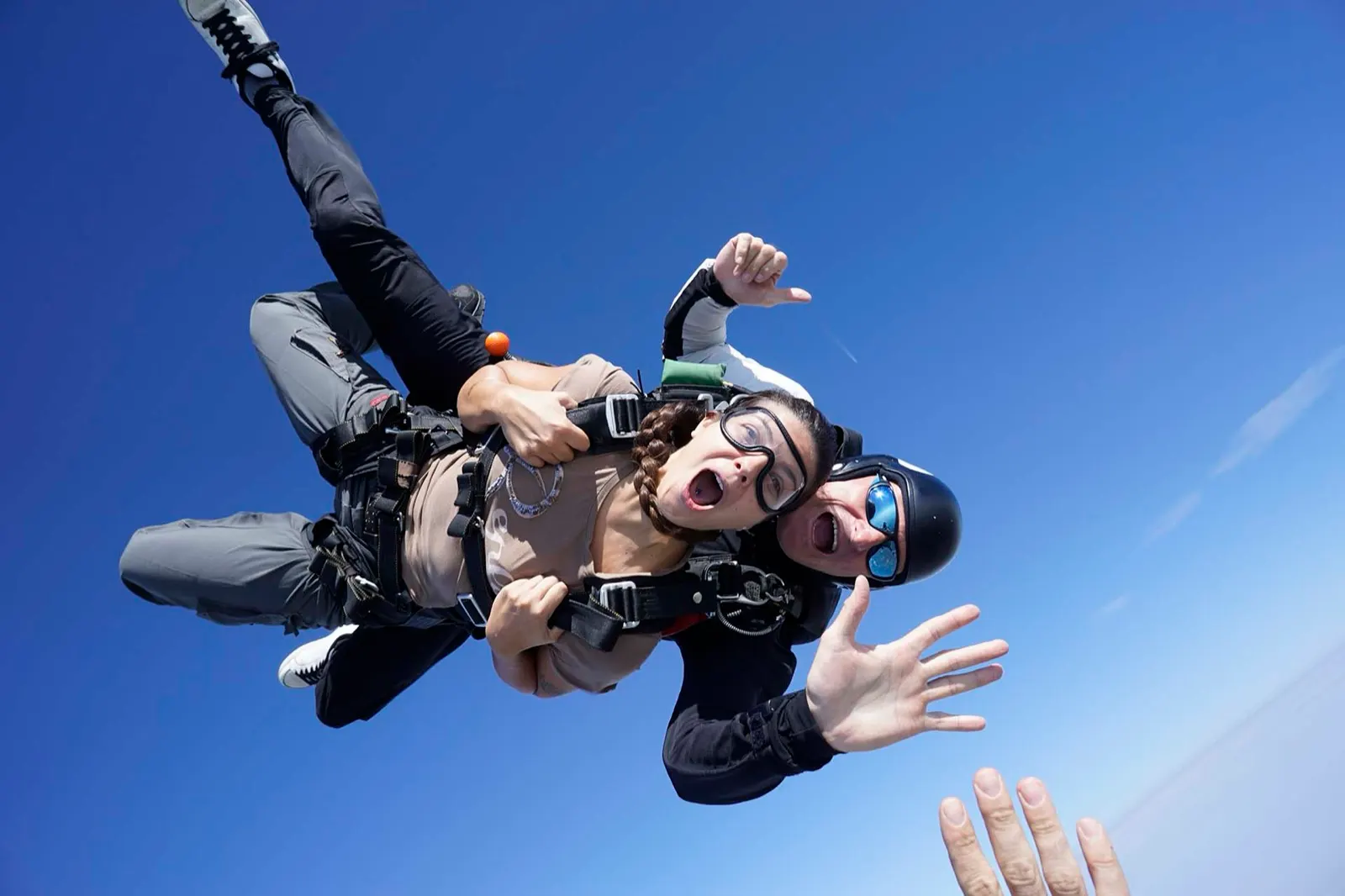
Guides
What altitude do you skydive from (and why it matters)
Jump altitude varies from one Italian dropzone to another: we go up to 4,200 metres, for around 50-60 seconds of freefall.
Read the article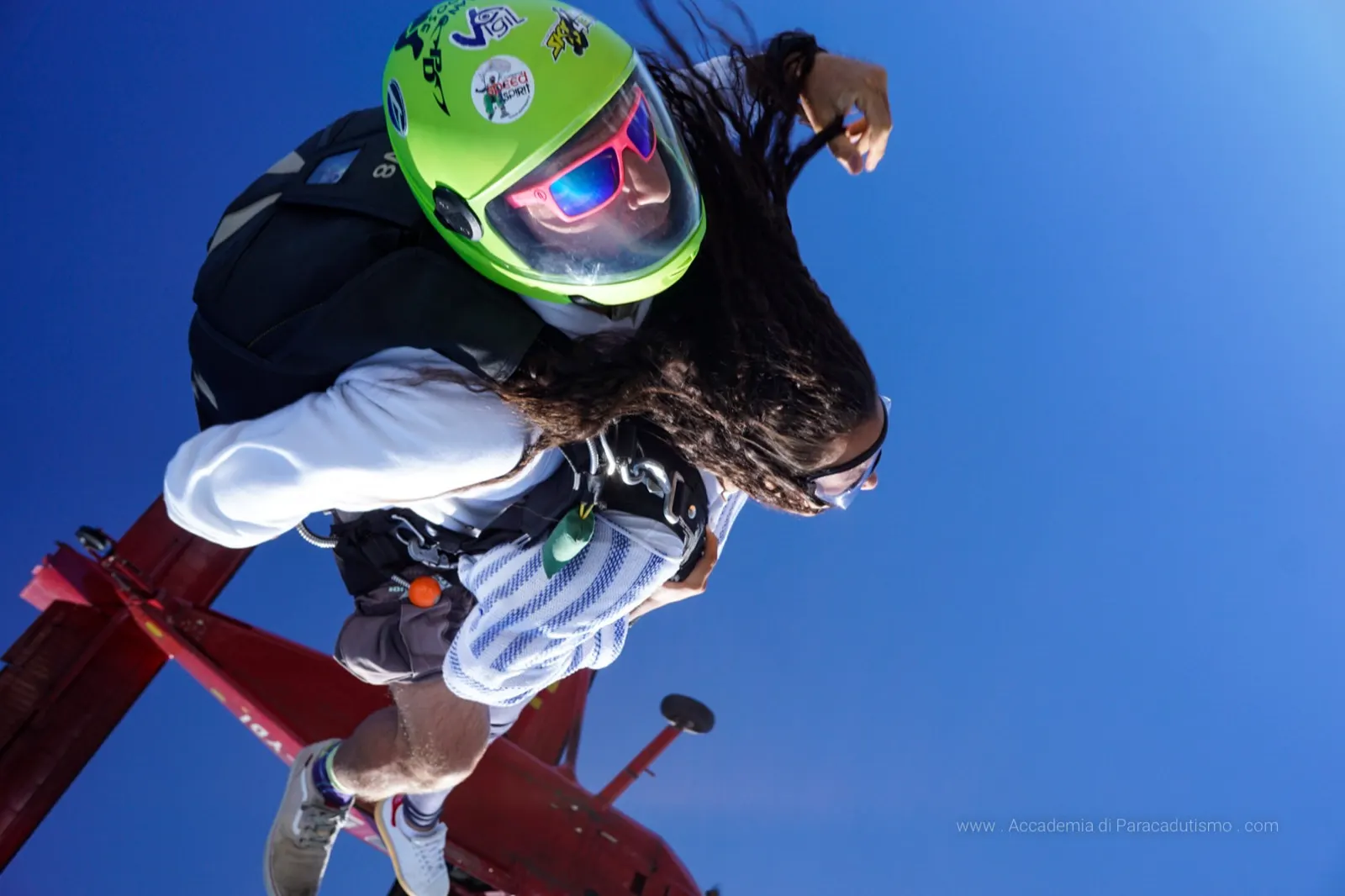
Guides
Skydiving freefall: how long it lasts and how fast you go
From 4,200 metres freefall lasts around 50-60 seconds at about 200 km/h: every number of the jump, phase by phase.
Read the article