
Preparing for your first tandem jump: Skydiving Guide
Updated on September 19, 2026 · 8 min read
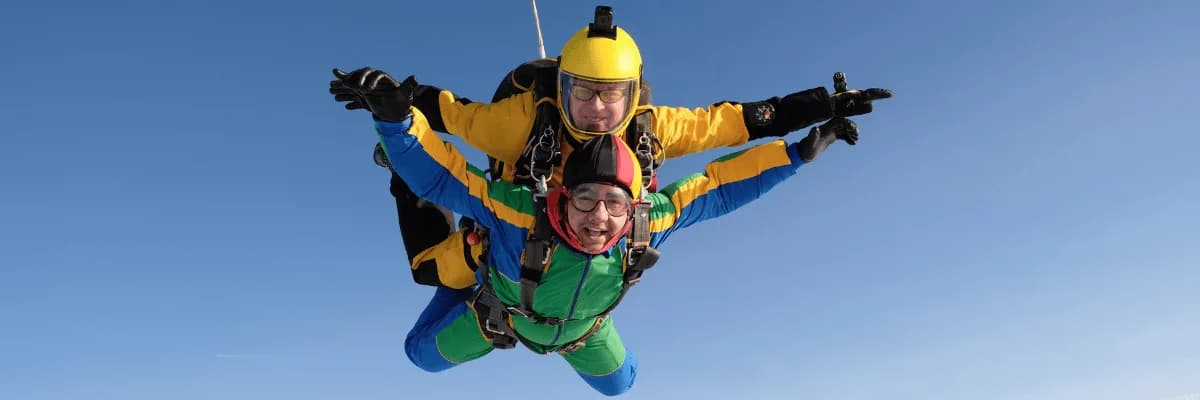
You have booked your first tandem skydive and you are wondering what exactly happens from the moment you arrive at the dropzone. This guide walks through jump day, step by step, and explains how to prepare in the 24 hours before. If you are still deciding and looking for requirements, weight limits, what to bring and prices, start from what to know before booking a tandem jump.
What is tandem skydiving and how do you prepare?
Tandem skydiving is the easiest and safest way to try skydiving for the first time: you are securely attached to an experienced instructor by a purpose-built harness, and no technical preparation or special ability is required. The entry requirements (minimum age of 16, good health, weight and harness fit, the documents to bring) are covered one by one in requirements and questions before you book.
Ready to jump? Book your tandem with no advance payment.
Book nowThe instructor takes care of all the technical operations, such as altitude control, parachute deployment and landing. This allows you to focus solely on the experience and the breathtaking views around you. Read on to learn more about tandem skydiving: the complete beginner's guide.
What to expect on the day of the jump?
From arriving at the dropzone to handing the gear back takes 2-3 hours on average, but the time actually spent flying is far shorter: about 25 minutes of climb, 50-60 seconds of freefall and 5-10 minutes under canopy. Here is the day at a glance:
| Phase | Typical duration | What you do |
|---|---|---|
| Arrival and check-in | Varies with your flight slot | Registration, paperwork and meeting your instructor |
| Pre-jump briefing | About 20-30 minutes | Exit position, freefall body position and landing technique |
| Gearing up and checks | A few minutes before boarding | Jumpsuit, harness, goggles, helmet and a double check of the hooks |
| Climb to altitude | About 25 minutes | Climbing to 4,200 metres and getting mentally ready |
| Freefall | 50-60 seconds | You exit the plane and fly at around 200 km/h |
| Canopy flight and landing | 5-10 minutes | Deployment at about 1,500 metres, a few turns and a soft landing |
Each phase is described in detail below.
1. Pre-jump briefing
Before boarding the plane, you will take part in a training session lasting approximately 20-30 minutes. During the briefing, your instructor will explain:
- The correct position to maintain during the jump
- How to safely exit the plane during the launch
- What to expect in the freefall phase
- Landing techniques in total safety
This phase is essential to ensure you have a completely worry-free experience.
2. Dressing and preparation
After the briefing, you will receive all the necessary equipment:
- Jumpsuit, designed to reduce friction with the air
- Protective goggles, to protect your eyes from the high-speed wind
- Safety harness, which keeps you securely attached to the instructor
- Protective helmet, for extra safety
The instructor will check that everything is properly fastened and secure before boarding the plane.
3. The flight and the jump from the plane
Once you are ready you will board the aircraft and start the climb to jump altitude, 4,200 metres. The climb takes about 25 minutes: this is when you see Monferrato from a perspective you have never had, chat with the other skydivers on board and get your head in the right place. Just before the exit, your instructor runs through the position with you and checks the four harness hooks one last time.
Once you reach the required altitude, the door will open and, together with the instructor, you will launch yourself into the void!
- Freefall: 50-60 seconds at around 200 km/h, with the air holding you up rather than dropping you. It is the part everyone remembers: we describe it in what a skydive actually feels like.
- Parachute deployment: at around 1,500 metres the instructor opens the canopy, the roar of the wind disappears at once and a calm 5-10 minute flight begins, with a few turns if you fancy trying them.
- Landing: the instructor asks you to lift your legs out in front of you, and the touchdown is soft, often sitting down. Once the hooks are released, your first jump is officially in the books.
After landing: how the day ends
As soon as you are down, the instructor helps you out of the harness and you catch your breath: the most common feeling in those first minutes is elation and an urge to go straight back up. You hand back the jumpsuit, helmet and goggles and, if you chose the video service, collect the footage of your jump. Adding up check-in, briefing, waiting for your slot, the flight and the return, your time at the dropzone comes to 2-3 hours: worth knowing if you have friends with you, or if you want to make a day of it and explore Monferrato.
The 24 hours before: how to get ready
The 24 hours before the jump ask very little of you: sleep well, eat light, dress comfortably and skip the alcohol the night before. There is no training to do and no technique to study, because the morning briefing covers everything you need to know.
Choose the right clothing
- Wear comfortable and snug clothes, such as sweatpants and a long-sleeved shirt.
- Use closed shoes, preferably sneakers or trekking shoes.
- Avoid loose clothing, scarves or accessories that could get caught on your equipment.
Remember that it is noticeably colder at altitude than on the ground: our season-by-season guide is what to wear for skydiving. If you wear prescription glasses or contact lenses you can keep them on, as we explain in skydiving with glasses or contact lenses.
Sleep well and eat a light breakfast
- Rest the night before so you can face the experience with energy.
- Have a light breakfast, avoiding overly heavy meals or foods that can cause stomach discomfort.
The night before, skip the alcohol and get to bed at a sensible hour: turning up rested makes far more difference than any physical preparation. In the morning drink enough water and go easy on the coffee, because the jump will handle the adrenaline for you. For any last-minute doubts about requirements or documents, everything is in what to know before your jump.
Keep calm and relax
It's normal to feel a little nervous, but remember that you are in the hands of experienced professionals. Take a deep breath and enjoy the moment!
Bring friends or family
Sharing this experience with someone special will make it even more exciting. Furthermore, many centres allow companions to witness the landing: book your jump and bring along the people you care about.
Skydiving: overcoming the fear of the void
If you are afraid of heights, know that the sensation of skydiving is completely different from what you experience, for example, on a fairground ride or looking down from a building.
Why? During freefall, you will not feel the sense of emptiness as in a normal fall, because the speed and wind create a floating effect. Once the parachute opens, the flight is smooth and relaxing. Focus on the spectacular view and let the thrill take over!
Why choose a tandem jump with Accademia di Paracadutismo?
By choosing to jump with Accademia di Paracadutismo, you will be guaranteed a safe and exciting experience thanks to:
- Certified instructors: professionals with years of experience in the field.
- State-of-the-art equipment: latest-generation materials for maximum safety.
- Exclusive locations: breathtaking landscapes to make your flight even more memorable.
- Video and photo options: relive the thrill of your jump with a professional video of the experience.
Frequently asked questions
- What are the requirements for a tandem jump?
- You need to be in good health, at least 18 years old (or 16 with parental permission) and within the weight limits, usually up to about 100 kg. No previous experience is required.
- How long does the freefall last in a tandem jump?
- Freefall lasts about 40-60 seconds, at a speed that can reach 200 km/h. After the parachute opens, at around 1,500 metres, you enjoy a calm flight of about 5-10 minutes down to the landing.
- What should I wear for my first jump?
- Wear comfortable, snug clothes and closed shoes such as sneakers or trekking shoes. Avoid loose clothing, scarves or accessories that could get caught on the equipment.
- Do I need any specific preparation or training?
- No. A tandem jump requires no technical preparation: a 20-30 minute briefing is enough, and the certified instructor manages all the technical aspects of the jump.
- I'm afraid of heights: can I still jump?
- Yes. In freefall you do not feel the sense of the void the way you would looking down from a building, because the speed and wind create a floating effect. After the parachute opens, the flight is smooth and relaxing.
- What time should I arrive, and how long does the whole day take?
- We give you your call time when your booking is confirmed. Allow 2-3 hours at the dropzone in total: check-in, a 20-30 minute briefing, waiting for your flight slot, a climb of about 25 minutes, the jump itself and the wrap-up.
- Can I eat before a tandem jump?
- Yes, and it is better not to skip the meal. Have a light breakfast or snack a couple of hours before and avoid large meals: arriving on an empty stomach is tiring, arriving stuffed is uncomfortable on the climb.
- Can I bring my phone or an action camera on the jump?
- No: anything held in your hand is lost in freefall, and loose items stay on the ground. Filming is handled by the instructor or a dedicated camera flyer through the optional photo and video service.
- Do I have to do anything during the jump, or does the instructor handle it all?
- The instructor handles it all: altitude, deployment and landing are his responsibility. All you have to do is hold the body position you learned in the briefing when you exit the plane, and lift your legs out in front of you for the landing.
Ready for your tandem jump?
Free, flexible booking with no advance payment. Over 400 five-star reviews.
Useful resources
Keep reading
Guides
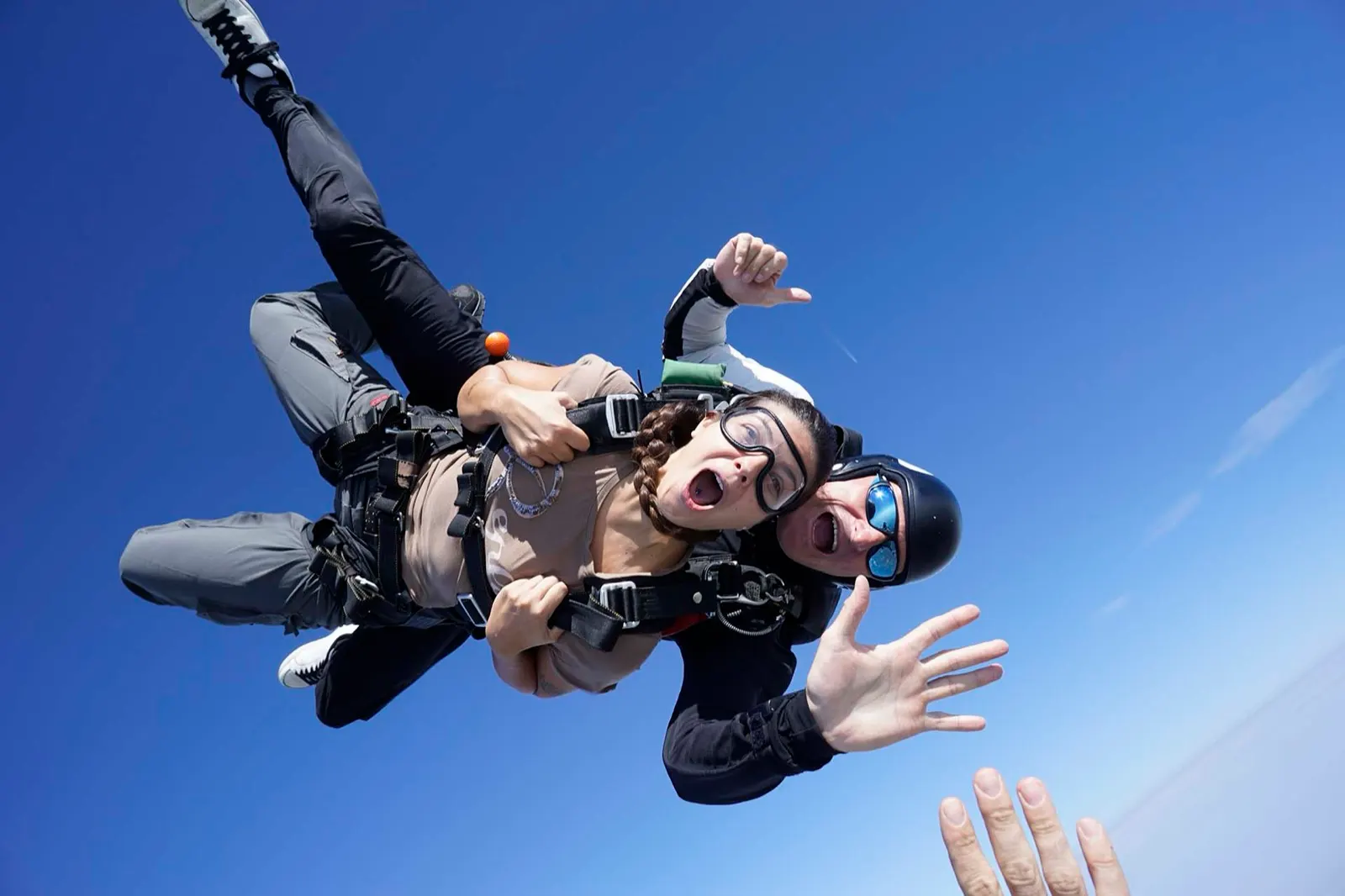
What altitude do you skydive from (and why it matters)
Jump altitude varies from one Italian dropzone to another: we go up to 4,200 metres, for around 50-60 seconds of freefall.
Read the article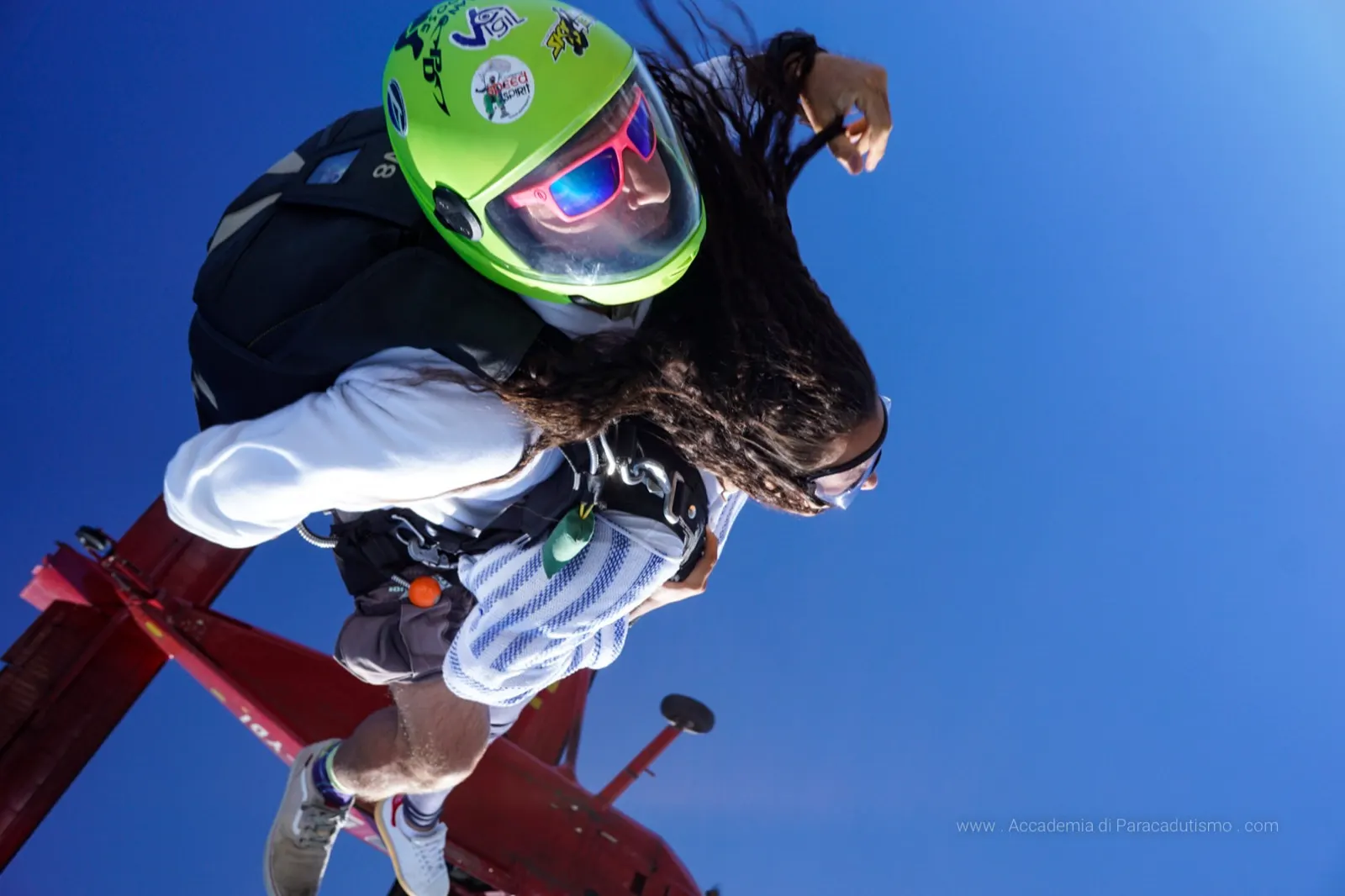
Guides
Skydiving freefall: how long it lasts and how fast you go
From 4,200 metres freefall lasts around 50-60 seconds at about 200 km/h: every number of the jump, phase by phase.
Read the article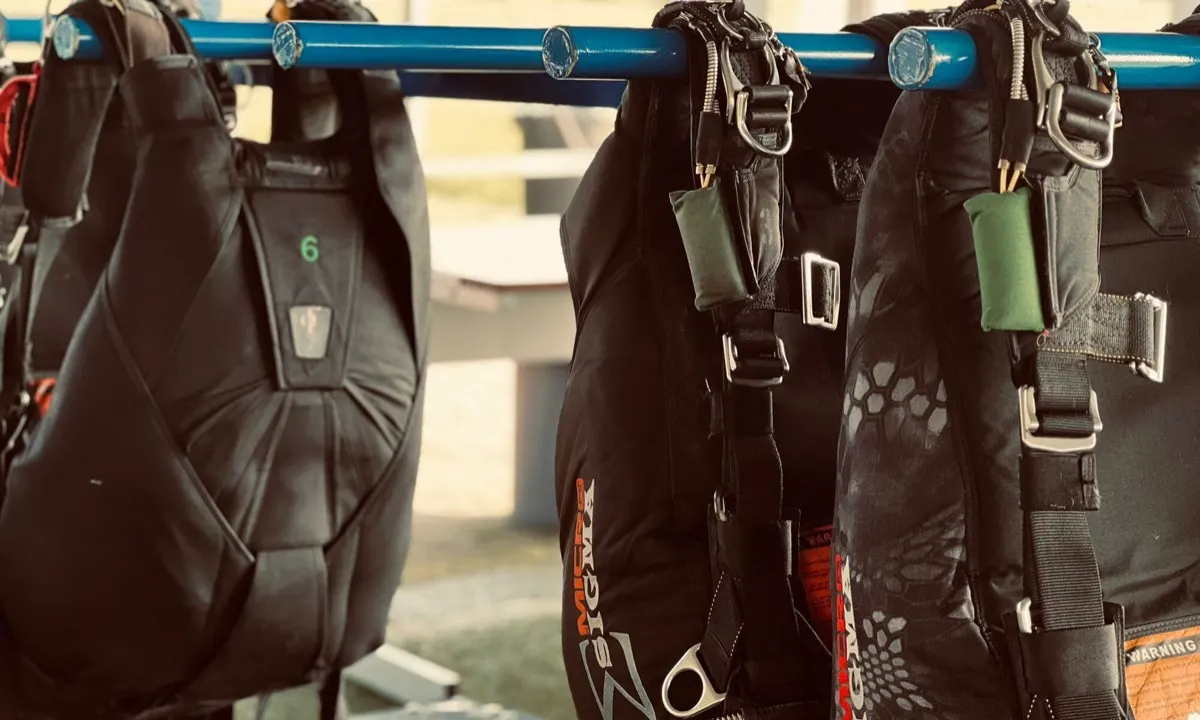
Guides
New or used parachute: how to choose
New or used: how to choose your first parachute, from documentation to lifespan and maintenance, and why it all starts with the AFF course.
Read the article