
What does it feel like to jump with a parachute?
Updated on September 19, 2026 · 7 min read
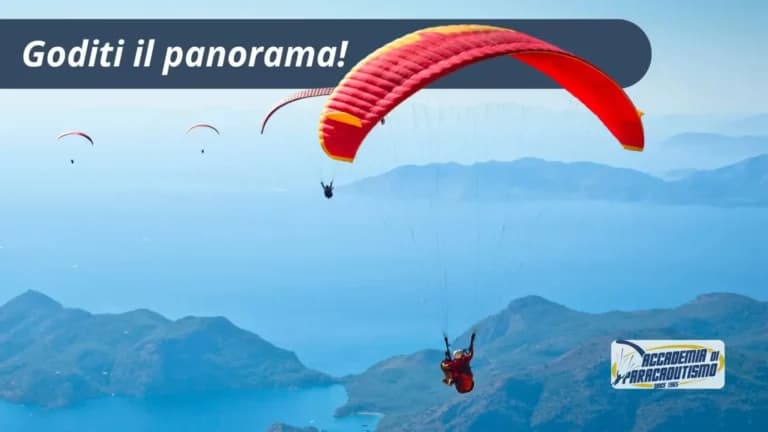
A skydive is a unique blend of adrenaline and serenity. During freefall, you experience a rush of intense emotions as you reach speeds of 200 km/h, but without the sensation of falling. Once the parachute opens, you enter a moment of peace and contemplation, with breathtaking views and the opportunity to manoeuvre the parachute under the guidance of an instructor. It's an experience that combines adventure, freedom and a profound connection with the environment, creating lasting memories.
But what does it feel like during a skydive? This is surely the first question that comes to mind when you think about trying this incredible adventure.
Many describe this phase as a "floating" on a cushion of air, a feeling of suspension and absolute freedom.
Ready to jump? Book your tandem with no advance payment.
Book nowA skydive is an experience that combines adrenaline, freedom and a deep connection with the surrounding environment.
Adrenaline rushes through your veins from the very first moments. It's a unique feeling of freedom: the wind whipping your face, the landscape unfolding beneath you, and the knowledge that you're experiencing a once-in-a-lifetime moment. If the fear of heights is what holds you back, we talk about it openly in overcoming the fear of heights, vertigo and acrophobia.
During a tandem jump, you are firmly attached to an experienced instructor, which allows you to experience the adventure in total safety. Knowing that a qualified and trained person takes care of every technical aspect allows you to completely abandon yourself to the experience.
The moment of the leap
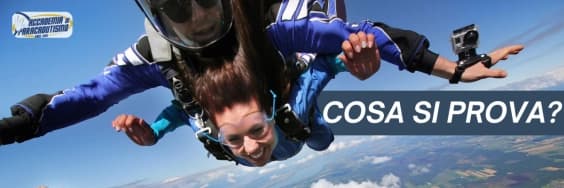
Having reached an altitude of 4,200 metres, the plane opens the door.
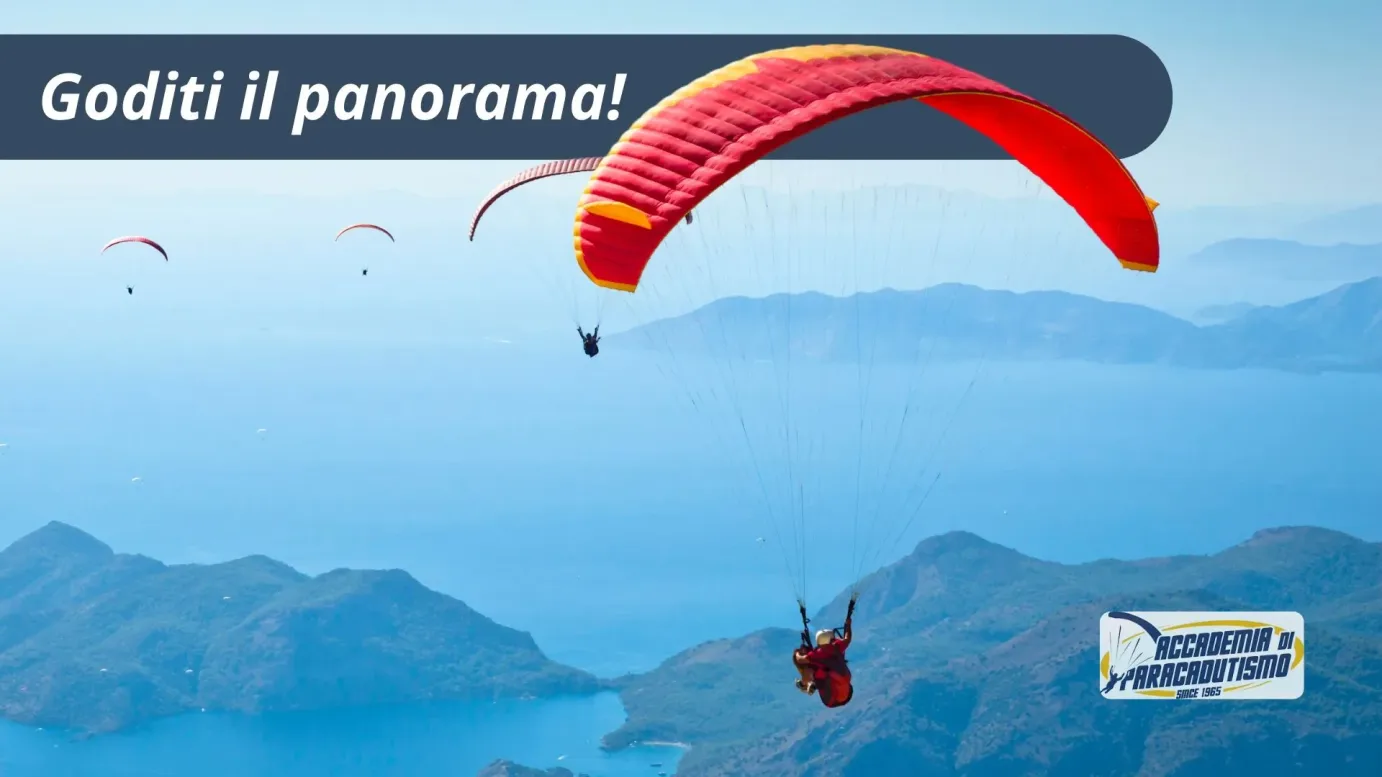
Your heart races, adrenaline floods your body, and with a deep breath, you leap into the void. The initial feeling is one of pure excitement: a mix of fear and excitement as you walk through the door into the unknown. That altitude is not picked at random — we explain why you exit from exactly there in what altitude you skydive from.
It was the best, most adrenaline-filled experience of my entire life. The instructors and videographers are fantastic! They make you feel incredibly confident, with zero fear, and a strong desire to jump and, above all, repeat the experience. I recommend it to everyone!!! Jump done with the Accademia di Paracadutismo. — Nicole Pierangeli
The free fall
In free fall you reach speeds of around 200 km/h, for 50-60 seconds. The exact figures, and why they change from jump to jump, are in how long freefall lasts and how fast you go.
Contrary to what you might think, you don't feel like you're falling into the void. Breathing occurs normally, and the air flowing over the face amplifies the perception of speed and movement.
Many describe this phase as "floating" on a cushion of air, a sensation of suspension and absolute freedom.
You will be able to breathe normally throughout the whole jump!
The opening of the parachute
After about 60 seconds of pure adrenaline in free fall, comes one of the most iconic moments of the jump: the opening of the parachute. This gesture transforms the entire experience. You feel a distinct slowing down, as if time were slowing down along with the speed. The intense rustle of the wind that accompanies freefall fades, giving way to an almost magical silence, interrupted only by the faint hiss of the parachute opening.
At this stage, the dominant sensation changes: from the explosion of emotions of free fall, you move on to a contemplative calm.
The bird's-eye view offers a breathtaking sight, sweeping across distant horizons and landscapes that seem hand-drawn. Whether you're flying over cities, mountains, or expanses of countryside, every detail appears incredibly sharp and vivid.
This moment also offers the opportunity to interact with the instructor. In many cases, they'll explain how to manoeuvre the parachute, allowing you to feel direct control over the flight. It's an experience that combines the thrill of flight with the awareness of being suspended in perfect balance between sky and earth.
Open gliding
After the intense adrenaline rush of freefall, flying under an open parachute represents a transition to a feeling of peace and lightness.
This phase lasts about 5-10 minutes, a time during which the world seems to slow down, allowing you to fully enjoy the view and the tranquillity of the moment.
It's the perfect opportunity to observe the landscape from a unique perspective: the land unfolds like a detailed map, with rivers, fields and cities stretching to the horizon. The silence that accompanies the flight, interrupted only by the rustle of the parachute, amplifies the sense of connection with the surrounding environment.
During the flight, the instructor not only ensures safety but also makes the experience interactive and engaging. In many cases, they offer the opportunity to take control of the parachute, allowing you to experiment with simple manoeuvres like turns or changes of direction. This active participation increases the sense of control and makes the moment even more memorable.
For those seeking not only an adrenaline rush but also an experience that combines contemplation and adventure, flying under an open parachute is the perfect culmination.
The landing
The landing is generally soft and controlled. Once you're back on the ground, the feeling is indescribable: a mix of euphoria, satisfaction, and, for many, an immediate desire to repeat the experience.
To sum up, here is how the sensations change phase by phase during a tandem jump:
| Phase | How long it lasts | What it feels like |
|---|---|---|
| Climb to 4,200 metres | About 25 minutes | Anticipation, the view from above, adrenaline slowly building |
| Leaving the aircraft | A few seconds | The emotional peak: racing heart and nothing under your feet |
| Freefall | 50-60 seconds at around 200 km/h | Powerful wind on your face and a feeling of floating, not falling |
| Parachute deployment | At about 1,500 metres | A distinct slowing down and sudden silence |
| Flight under canopy | Several minutes | Contemplative calm, the view, and the chance to steer |
| Landing | A few moments | Euphoria, relief and an immediate urge to do it again |
In conclusion
Skydiving offers a journey through a spectrum of intense emotions, from initial trepidation to pure joy, passing through moments of calm and contemplation. It's an adventure that challenges your limits and leaves lasting memories. Book your jump and discover it for yourself.
Frequently asked questions
- What does free fall really feel like?
- Contrary to what you might think, you don't feel like you're falling into the void. Many describe free fall as "floating" on a cushion of air: a rush of adrenaline and a sense of absolute freedom, at around 200 km/h.
- Can you breathe during the jump?
- Yes, you breathe normally throughout the entire jump. There is plenty of air, and the flow over your face only amplifies the perception of speed.
- How long does the open-parachute flight last?
- After free fall, gliding under the open canopy lasts about 5-10 minutes: a moment of peace in which the world seems to slow down and you can enjoy the view.
- Can you steer the parachute during a tandem jump?
- In many cases yes: the instructor explains how to manoeuvre the parachute and offers you the chance to try simple manoeuvres like turns or changes of direction, in complete safety.
- What is the landing like?
- The landing is generally soft and controlled, guided by the instructor. Once back on the ground, you feel a mix of euphoria, satisfaction and often an immediate desire to do it all again.
- What does it feel like when the parachute opens?
- You feel a distinct slowing down and the noise of the wind fades, giving way to an almost magical silence. You move from the explosion of emotions of free fall to a contemplative calm.
- How long does freefall last?
- From a jump at 4,200 metres, freefall lasts 50-60 seconds at around 200 km/h. The whole experience at the dropzone — preparation, climb, flight and landing — takes 2-3 hours.
- Do you get the stomach-drop feeling you get on a roller coaster?
- Generally not. On a roller coaster that feeling comes from nearby reference points rushing past; at altitude there are none, and after the first moments what you feel is mostly the wind, not the fall.
- Is it cold during the jump?
- It is colder at altitude than on the ground, but the jump is short and the gear protects you well. Comfortable sportswear is enough, with one light extra layer on cooler days.
Ready for your tandem jump?
Free, flexible booking with no advance payment. Over 400 five-star reviews.
Useful resources
Keep reading
Guides
Casale Monferrato Skydiving Prices 2026
Discover the prices for skydiving in Casale Monferrato in 2026
Read the article
Guides
Skydiving Prices in Italy: The Complete 2026 Guide
The price of a tandem jump ranges on average between €200 and €280, varying by area, school, and number of people.
Read the article
Guides
Gift a Tandem Skydiving Coupon: Pure Adrenaline (Near Milan)
Gift a tandem parachute jump for a unique, unforgettable experience! Valid for 12 months, with a flexible date, instant email delivery, and the option to add photos and video. The perfect gift for experiencing emotions in total safety.
Read the article