What to Wear for Skydiving: Complete 2026 Guide
Updated on September 19, 2026 · 8 min read
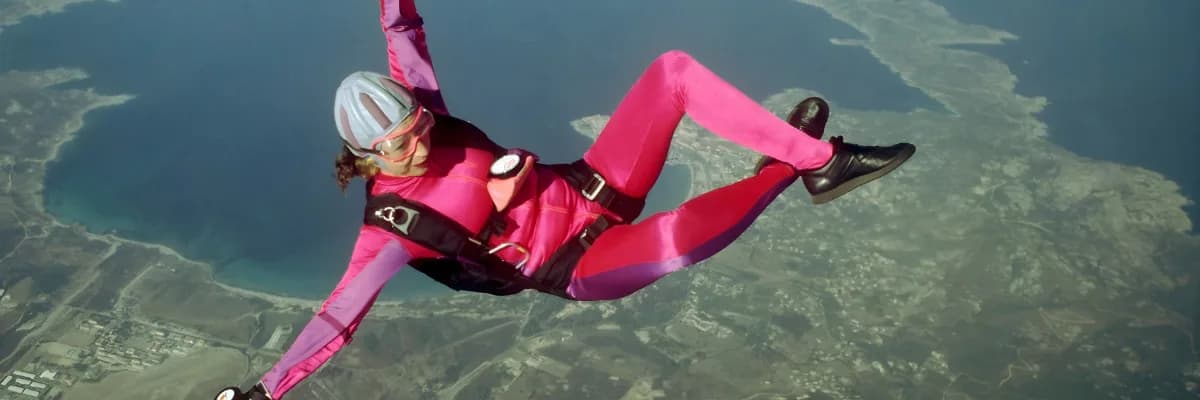
You're about to do your first jump and you're wondering how to dress for skydiving without getting it wrong? It's a perfectly normal question: choosing the right skydiving clothing helps you feel more comfortable, move better under the harness and experience the jump with greater peace of mind.
In this guide you'll find clear, practical advice on what to wear for skydiving, with a focus on what to wear for a tandem jump, what to avoid and how to adjust depending on the season. The goal: to arrive at the drop zone fully ready, with no doubts and no "surprises".
What to wear for a skydive: the golden rule
Ready to jump? Book your tandem with no advance payment.
Book nowIf you want a simple rule to understand what to wear for skydiving, it's this: dress as you would for an outdoor sporting activity, choosing comfortable clothes without loose parts.
For a tandem jump, the instructor will put a harness on you and, in many cases, a suit over your clothes. For this very reason, the tandem jump clothing must be practical: it must fit well under your gear, not be too tight, and not have details that could be annoying (drawstrings, bulky hoods, stiff collars).
If you're wondering what to wear for a skydive, the most correct answer is: simple, sporty, clean-cut clothing. It seems trivial, but it's what really works.
How to dress for a tandem jump: what to really choose
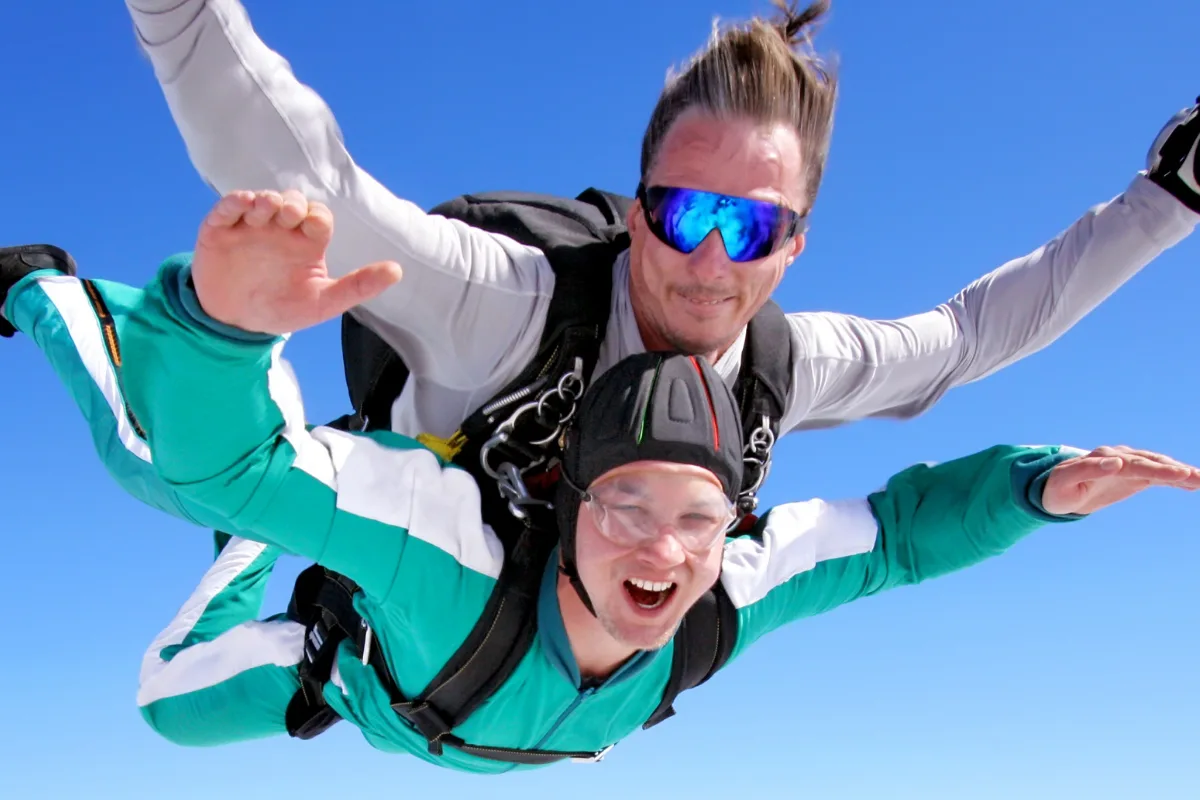
When talking about how to dress for a tandem jump, the most common mistake is to overdo it: too many things on, bulky jackets, useless accessories. In reality, the ideal clothes for skydiving are those that allow you to sit comfortably on the plane and move well during the exit and landing phases.
For the tandem jump clothing, these work well:
- long sports trousers or leggings (also tracksuit or technical trousers)
- a comfortable top (better if not too loose)
- a light sweatshirt or extra layer if the season requires it
Think about comfort under the harness: avoid garments with thick seams at the waist or stiff belts, as you may feel them more. For skydiving clothing for beginners, simplicity always wins.
Skydiving shoes: which to use and which to avoid
Shoes matter more than you think. The shoes to use for skydiving are definitely closed shoes, comfortable and well-laced.
The ideal skydiving shoes are sneakers or running shoes with:
- laces (to be tightened well)
- a stable sole
- good grip
Instead, avoid sandals, slippers, open-toed shoes, shoes with hooks or other elements that can get caught. Heavy boots are also not recommended: they're uncomfortable, overheat, and often restrict movement.
How to dress for skydiving in summer
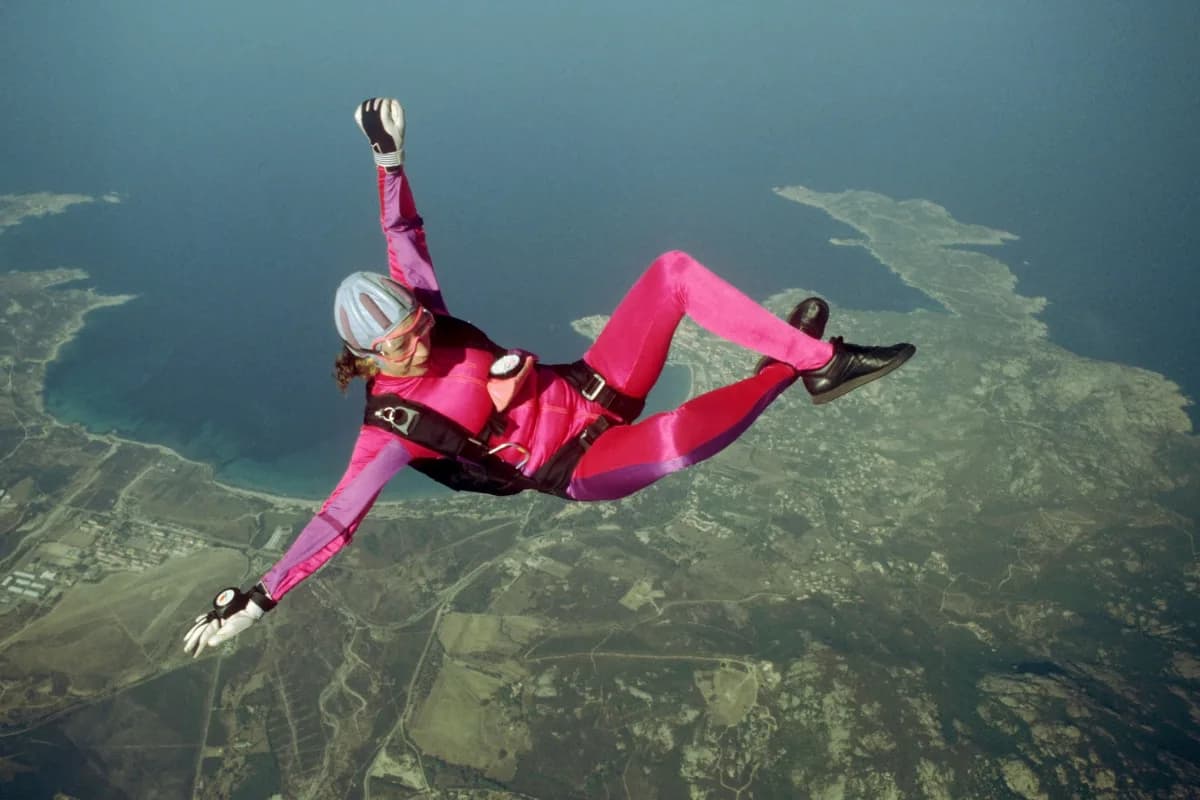
In summer, many people think, "it's hot, so I'll pack light". In reality, during a jump you're at high altitude and you can feel the wind during free fall, so it's best not to overdo it with overly "summery" clothing.
Regarding the summer period, the most practical choice is lightweight but covering sportswear: long, thin trousers and a technical top or comfortable T-shirt. Bring water, too: staying hydrated makes all the difference, especially if you're waiting your turn in the sun.
An often overlooked tip: avoid fabrics that are too smooth and "slippery" as they can move a lot under the harness. In general, for free fall clothing, it's better to have stable items that don't pull or flap around.
How to dress for a winter skydive
In winter, the question is always the same: "will I be cold?". The rule is simple: it's colder at altitude than on the ground — you leave the aircraft at 4,200 metres, as we explain in what altitude you skydive from — so it's best to dress in layers.
If you want to know how to dress for a skydive in winter, its tips are:
- a technical shirt or light thermal underwear
- a non-bulky sweatshirt or fleece
- comfortable long trousers
- light gloves if you feel the cold
The point is not to "stuff up", but to build clothing that keeps you warm without becoming stiff. Parachute jump clothing must allow you to move your legs and arms freely, even during the landing phase.
Can you wear jeans skydiving?
Yes, you can wear jeans for skydiving, but they're not the best choice for everyone. If they're comfortable, stretchy and not constricting, they're fine. However, if they're stiff (like thick denim), they can be uncomfortable under a harness, especially around the waist and behind the knees. Athletic or stretch trousers are always better: more comfort, less worry.
Can you wear glasses while skydiving?
Yes: you'll usually be given protective goggles that go over your glasses and shield your eyes from the wind, and contact lenses are normally no problem either — you'll find all the details in our dedicated guide to skydiving with glasses or contact lenses.
What not to wear for skydiving
The "less is more" rule really applies here. If you want to know what not to wear for skydiving, think of anything that might bother you or move too much. Avoid:
- necklaces, long earrings, bracelets and dangling accessories
- scarves, voluminous hoods, long drawstrings
- shirts with a stiff collar (it tends to flip over in free fall)
- clothes that are too loose or baggy (especially in tandem)
It's not just a question of safety: it's also comfort. Skydiving clothing must stay "in place" while you're wearing the harness and suit.
Here is the quickest possible summary: on one side what is worth wearing, on the other what is better left at home.
| What to wear | What to avoid | Why |
|---|---|---|
| Long sports trousers or leggings | Stiff, thick denim jeans | Under the harness stiff fabrics are felt at the waist and behind the knees |
| A comfortable top, not too loose | Shirts with a stiff collar | In free fall the collar tends to flip over |
| Closed, well-laced sneakers | Sandals, slippers, shoes with hooks or heavy boots | You need a stable sole and good grip, especially on landing |
| A light sweatshirt or extra technical layer | Bulky jackets, scarves and voluminous hoods | It is colder at altitude, but extra bulk restricts your movement |
| Long hair tied up | Necklaces, bracelets and dangling accessories | Anything that dangles can get caught or become uncomfortable under the gear |
Recommended clothing for tandem jumps: a quick checklist
Use this checklist to make sure you have the correct tandem jump clothing and arrive ready for your jump:
- Closed and well-laced sneakers (the best skydiving shoes are the sporty ones)
- Comfortable, sporty or stretch long trousers
- A comfortable top or t-shirt, not too loose
- A light sweatshirt or extra layer if it's cool
- Sportswear without loose or bulky parts
- No accessories such as necklaces, bracelets, scarves or dangling objects
- Long hair tied up, for greater comfort during free fall
- Any personal glasses (they will be protected by the goggles provided)
By following this simple checklist, you'll have the perfect parachute jump clothing to enjoy your jump in total comfort and safety. For everything else — timings and how the day actually unfolds — take a look at what to know before your tandem jump.
How to dress for stress-free tandem skydiving
For a jump, especially if it's your first time, your clothing should make your life easier. Choose comfortable, sporty pieces, without unnecessary details. Pay particular attention to your shoes: they're the most important element after overall comfort.
If you want to arrive 100% prepared, remember this: when it comes to how to dress for a tandem jump, it's more a question of practicality than of "technique". With the right first parachute jump clothing you enjoy the experience, without distractions. Ready to go? Book your jump and come and visit us.
Frequently asked questions
- How should you dress for skydiving?
- Dress as you would for an outdoor sporting activity: comfortable clothes without loose parts. Long sports trousers or leggings, a comfortable top and a light sweatshirt if needed all work well. The rule is simplicity and comfort under the harness.
- What shoes do you wear for a tandem jump?
- Closed, comfortable and well-laced shoes: ideally sneakers or running shoes with laces, a stable sole and good grip. Avoid sandals, slippers, open-toed shoes, shoes with hooks and heavy boots.
- Can you wear jeans skydiving?
- Yes, if they're comfortable, stretchy and not constricting. Stiff, thick denim jeans can be uncomfortable under the harness, at the waist and behind the knees: athletic or stretch trousers are better.
- Can you keep your glasses on during the jump?
- Yes. You're usually given protective goggles that go over your glasses and shield your eyes from the wind. Contact lenses are usually no problem either.
- How should you dress for a winter skydive?
- It's colder at altitude than on the ground, so dress in layers: a technical shirt or light thermal underwear, a non-bulky sweatshirt or fleece, comfortable long trousers and light gloves if you feel the cold, without overstuffing.
- What is best not to wear for a jump?
- Avoid necklaces, bracelets and dangling accessories, scarves, voluminous hoods and long drawstrings, shirts with a stiff collar, and clothes that are too loose or baggy, especially in tandem.
- Should I tie my long hair up for the jump?
- Yes, it's recommended: loose hair moves a lot in free fall and can be uncomfortable for you and for your instructor. A simple hair tie, without rigid or bulky clips, is more than enough.
- Do I need to bring anything besides my clothes?
- Very little: the suit, the harness and the protective goggles are provided by us. The one genuinely useful thing to bring is water, especially in summer while you wait your turn in the sun.
- Is it cold at altitude even in summer?
- Yes, colder than on the ground: you exit the aircraft at 4,200 metres and fall at around 200 km/h, so you really feel the wind. Even in summer, light long trousers and a covering top beat overly summery clothing.
Ready for your tandem jump?
Free, flexible booking with no advance payment. Over 400 five-star reviews.
Useful resources
Keep reading
Guides
Indoor Skydiving vs Real Skydiving: What to Choose in 2026
A comparison between indoor skydiving and real skydiving in 2026, covering experience, costs, safety, and benefits to help you choose the flying activity that suits you best.
Read the article
Guides
Competitive Skydiving in 2026: How the Disciplines Are Changing
Indoor skydiving or real skydiving — which is better? Differences, costs, safety, benefits, and the flying experience, to help you choose the skydiving option best suited to your needs.
Read the article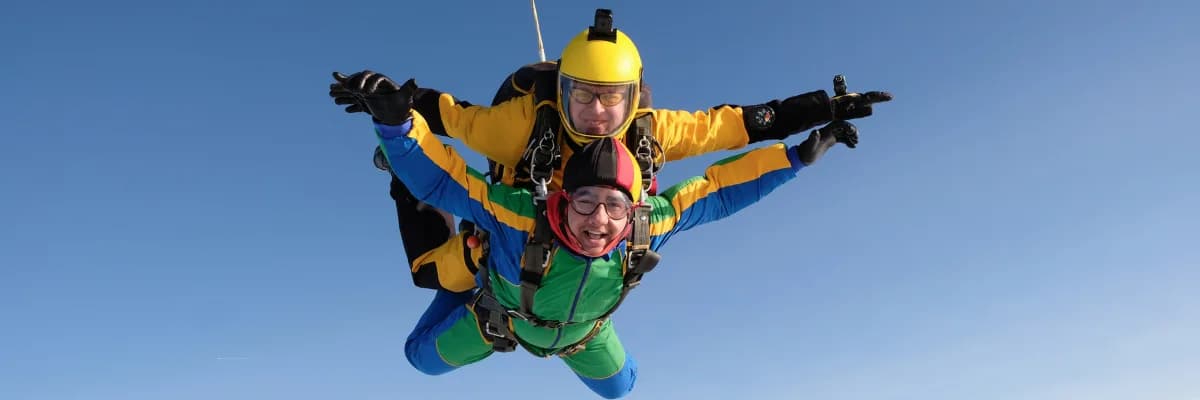
Guides
What is tandem skydiving and how does it work in 2026
Discover what tandem skydiving is and how a tandem jump works, from equipment and harness to the instructor's role, so you know what to expect from your first tandem jump.
Read the article