Skydiving or bungee jumping: what to choose in Milan
Updated on September 19, 2026 · 8 min read
Two different ways to jump (and experience heights)
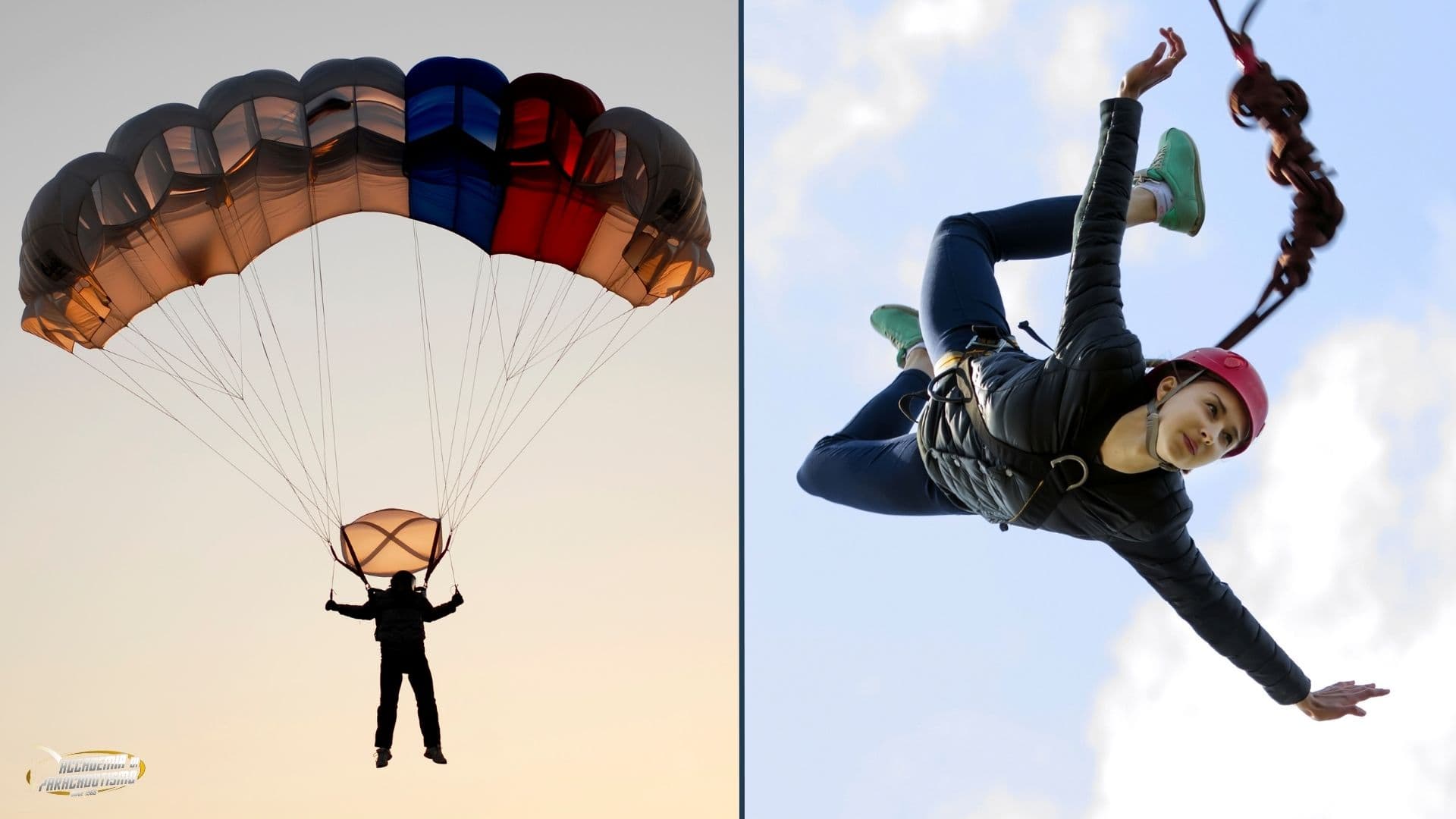
In bungee jumping, you leap from a fixed structure like a bridge or crane with an elastic cord tied to your body. Heights range between 50 and 200 metres, with the fall immediately followed by intense bounces providing an adrenaline rush in seconds.
In parachuting, you jump from an airplane between 3,000 and 4,200 metres, often in tandem with an instructor. After about a minute of free fall, the parachute opens for a smooth and controlled glide, allowing you to fly over Milan with a feeling of total freedom.
Ready to jump? Book your tandem with no advance payment.
Book nowTandem skydiving and bungee jumping side by side
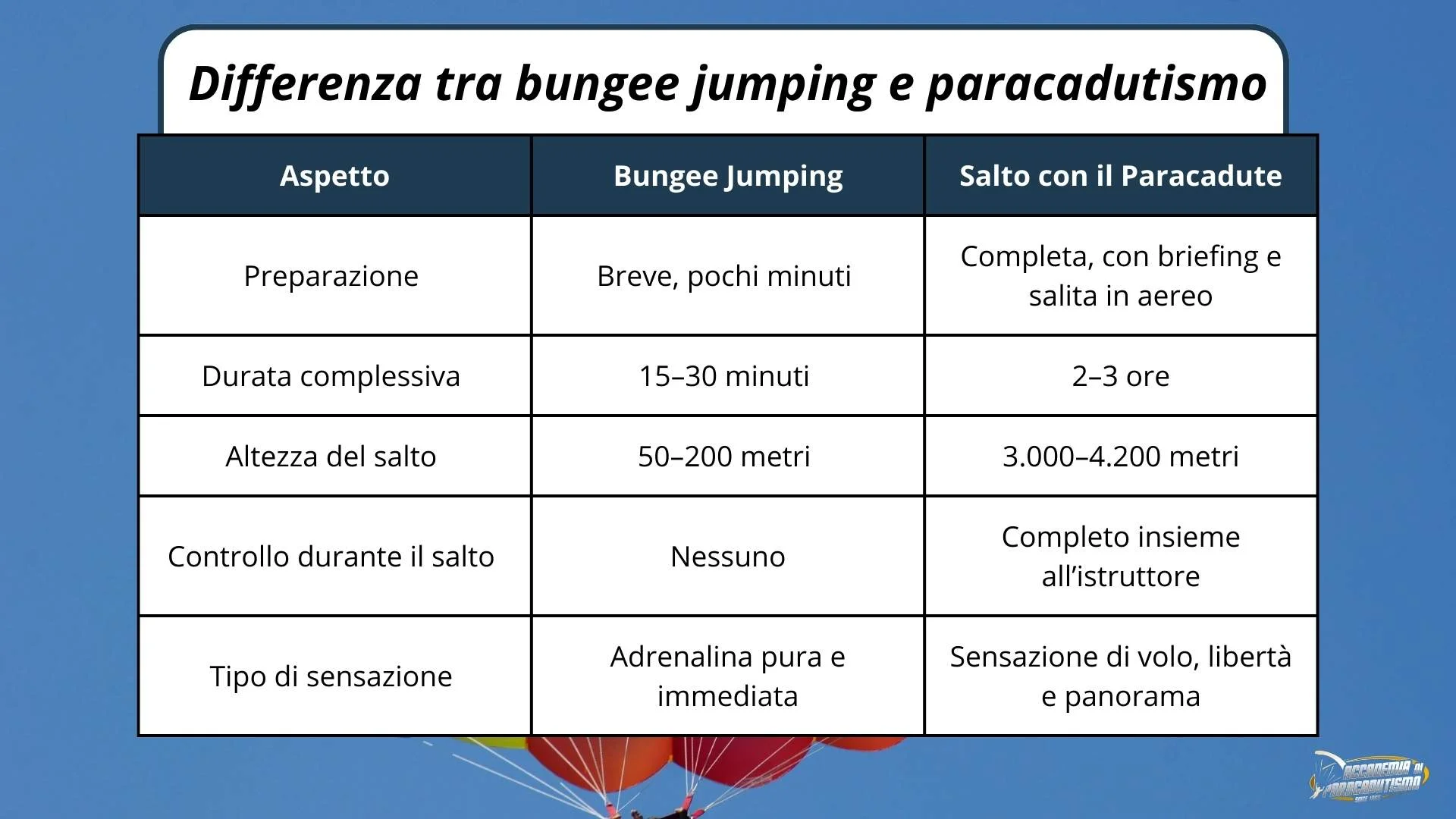
If you are short on time, this table sums up the differences that matter. The skydiving figures refer to a tandem jump at the Accademia di Paracadutismo; with bungee jumping, every structure is a different story.
| What changes | Tandem skydiving | Bungee jumping |
|---|---|---|
| Height | 4,200 metres, from an aircraft | A fixed structure: bridge, crane or platform |
| Length of the experience | 2 to 3 hours, including about 25 minutes of climb | A few minutes, briefing included |
| Length of the fall | 50 to 60 seconds at around 200 km/h, then 5 to 10 minutes under canopy | A few seconds, then the bounces of the cord |
| Who is in control | Your instructor, who flies the canopy and lets you steer part of it | Nobody: the cord decides the trajectory |
| Preparation needed | Briefing and gear fitting, no training; from age 16 | A short briefing on body position and safety |
| What you take home | A flight over the Monferrato hills, with optional photos and video | A short, intense rush of adrenaline |
Skydiving or bungee jumping: preparation, duration and control
The difference between bungee jumping and skydiving is immediately noticeable in preparation and duration. Bungee jumping requires only a short briefing with instructions on posture and safety, then you're ready to jump. It's ideal for first-time jumpers seeking a quick, intense experience.
The parachute jump is more complex. The experience begins with ground preparation, continues with ascent into the air, and culminates in a tandem jump followed by a long glide under canopy. The entire journey lasts two or three hours, offering a complete adventure.
In bungee jumping you cannot influence the fall, while in skydiving you can guide part of the descent with the instructor. The skydiving experience is more structured, engaging, and suitable for those dreaming of actually flying.
Fear of heights? Paradoxically, a parachute is less scary.
Yes: for most people jumping from 4,200 metres is less frightening than jumping off a platform, because fear of a drop needs nearby reference points and at altitude there are none.
Many believe jumping from 4,200 metres is scarier than jumping from a 70- or 100-metre platform. In reality, the opposite is often true. When bungee jumping, being close to the ground, your brain clearly perceives the depth beneath your feet and sees rocks, rivers, and structures approaching, making it easy to be scared.
In skydiving, you are so high that there are no reference points, and your brain cannot quite grasp how far you are from the ground. This results in less panic and more concentration. This is why many people with vertigo are able to try skydiving without problems and enjoy the experience.
Safety and reliability: where do you feel most at ease?
It depends on what reassures you: in bungee jumping everything rests on a single system, the cord and its structure, while a tandem jump gives you a certified instructor, a reserve parachute and an automatic activation device.
Both experiences are safe but follow different logics. In bungee jumping, safety depends on proper functioning of the bungee cord, its length, and the structure. Reliable operators use certified and continuously tested equipment, though human error can be more impactful.
In modern skydiving, especially tandem jumps, safety is paramount. Each piece of equipment is equipped with a reserve parachute and an automatic opening system. You fly with certified and highly qualified instructors following rigorous protocols. In Italy, skydiving is among the extreme sports with the lowest accident rate, especially at specialized centres like the Accademia di Paracadutismo.
How they feel: the two experiences compared
In short: bungee jumping is a single hit, a tandem jump is a build-up. The intensity is different, but what really changes is when the fear arrives.
Bungee jumping: fear first, adrenaline after
The hardest moment is on the platform, toes on the edge and the drop perfectly measurable below you. The fall then lasts a few seconds, the cord starts bouncing and that is it: what is left is the rush and the satisfaction of having gone.
Tandem skydiving: wind, not a drop
Here the tension builds slowly over the 25 minutes of the climb, then the exit wipes it out: during the 50 to 60 seconds of freefall at around 200 km/h the dominant feeling is not falling, it is being held up by a wall of air. At around 1,500 metres the canopy opens and the next 5 to 10 minutes are silence and scenery: the part almost nobody expects.
If that flying phase interests you more than the fall, the useful comparison is a different one: parachute or paragliding. And if you want to try freefall without boarding an aircraft, read indoor skydiving vs real skydiving.
What should you choose: bungee jumping in Milan or parachute jumping in Milan?
Choose bungee jumping if you want to face the drop in a few seconds and be home within the hour; choose a tandem skydive if you want a complete 2 to 3 hour experience, with a minute of freefall and a flight under the canopy.
The answer depends on you. If you're looking for a quick, intense experience to challenge your fear of heights, bungee jumping is your choice. If you want something more complete, exciting and visually spectacular that gives you the feeling of really flying, then skydiving is for you.
In practice, the decision comes down to a few typical situations:
| If you are looking for… | Your choice is… |
|---|---|
| A short thrill to slot between other activities | Bungee jumping |
| The feeling of flying, not just falling | Tandem skydiving |
| A day to remember, possibly with friends | Tandem skydiving |
| The view from above, with photos and video | Tandem skydiving |
| Looking the drop in the face and beating it | Bungee jumping |
Three questions that settle it
- How much time do you have? With half a day free a tandem fits easily; with a single hour, bungee jumping is more realistic.
- Adrenaline or flight? Bungee is concentrated in the first seconds, a tandem adds 5 to 10 minutes of canopy flight.
- Is it a gift? A tandem jump works well as a voucher, valid for 12 months, and works well for groups.
A tandem jump costs €180 on weekdays and €200 at weekends, with photos and video as optional extras: the details are on the prices page. Jumps are from Francesco Cappa airport in Casale Monferrato, 75 km from Milan, from age 16 and with no upper limit: once you have decided you can book your jump.
Discover flight with the Accademia di Paracadutismo
The Accademia di Paracadutismo is the go-to place for those wanting to experience the unique thrill of skydiving near Milan. With certified instructors, state-of-the-art equipment, and impeccable organization, you can experience the magic of your first tandem flight in complete safety and with the certainty of a lifetime memory.
Frequently asked questions
- What is a tandem skydive?
- Tandem skydiving is the safest and easiest way to experience freefall. You'll be tethered to an experienced instructor who takes care of everything, allowing you to enjoy the experience to the fullest.
- Is it safe to do a tandem skydive?
- Yes, tandem skydiving is very safe. Instructors are highly qualified and use high-quality equipment that is regularly inspected and maintained. Safety is the absolute priority.
- I suffer from vertigo, can I do a tandem skydive?
- Yes. At 4,200 metres altitude you lack the sense of depth because there is no fixed point of reference during freefall, so many people who suffer from vertigo are able to jump without any problems.
- How much does a parachute jump cost?
- With us prices start at €180 and go up to €200, not including the cost of video and photos, which are optional.
- How long does a parachute jump last?
- The total experience lasts more or less 45 minutes, from the moment the instructor harnesses you up to landing. The freefall lasts 1 minute and the glide under open canopy about 10 minutes.
- What happens in case of bad weather?
- In case of bad weather, do not worry! Our policy allows you to postpone the reservation to a new date, consistent with your work and personal commitments.
- Is bungee jumping safer than skydiving?
- They rely on two different safety systems, so a single number cannot compare them. In bungee jumping everything depends on the cord, its inspections and the structure you jump from. A tandem jump gives you a certified instructor, a main parachute, a reserve and an automatic activation device. In both cases the operator makes the difference: choose centres with certified equipment and qualified staff.
- How long does the fall last in skydiving compared with bungee jumping?
- On a tandem jump, freefall lasts 50 to 60 seconds at around 200 km/h, the canopy opens at about 1,500 metres and the flight continues for another 5 to 10 minutes. In bungee jumping the fall itself lasts a few seconds, followed by the bounces of the cord. The complete experience at the dropzone takes 2 to 3 hours, including roughly 25 minutes of climb.
- Where can you skydive near Milan?
- At Francesco Cappa airport in Casale Monferrato, 75 km from Milan, where the Accademia di Paracadutismo has been operating since 1965. Jumps are from 4,200 metres and the whole experience takes 2 to 3 hours, so it easily fits into half a day from Milan.
Ready for your tandem jump?
Free, flexible booking with no advance payment. Over 400 five-star reviews.
Useful resources
Keep reading
Guides
Overcoming the fear of heights: vertigo and acrophobia
Overcome the fear of heights and vertigo with practical strategies, psychological support and skydiving as a liberating experience.
Read the article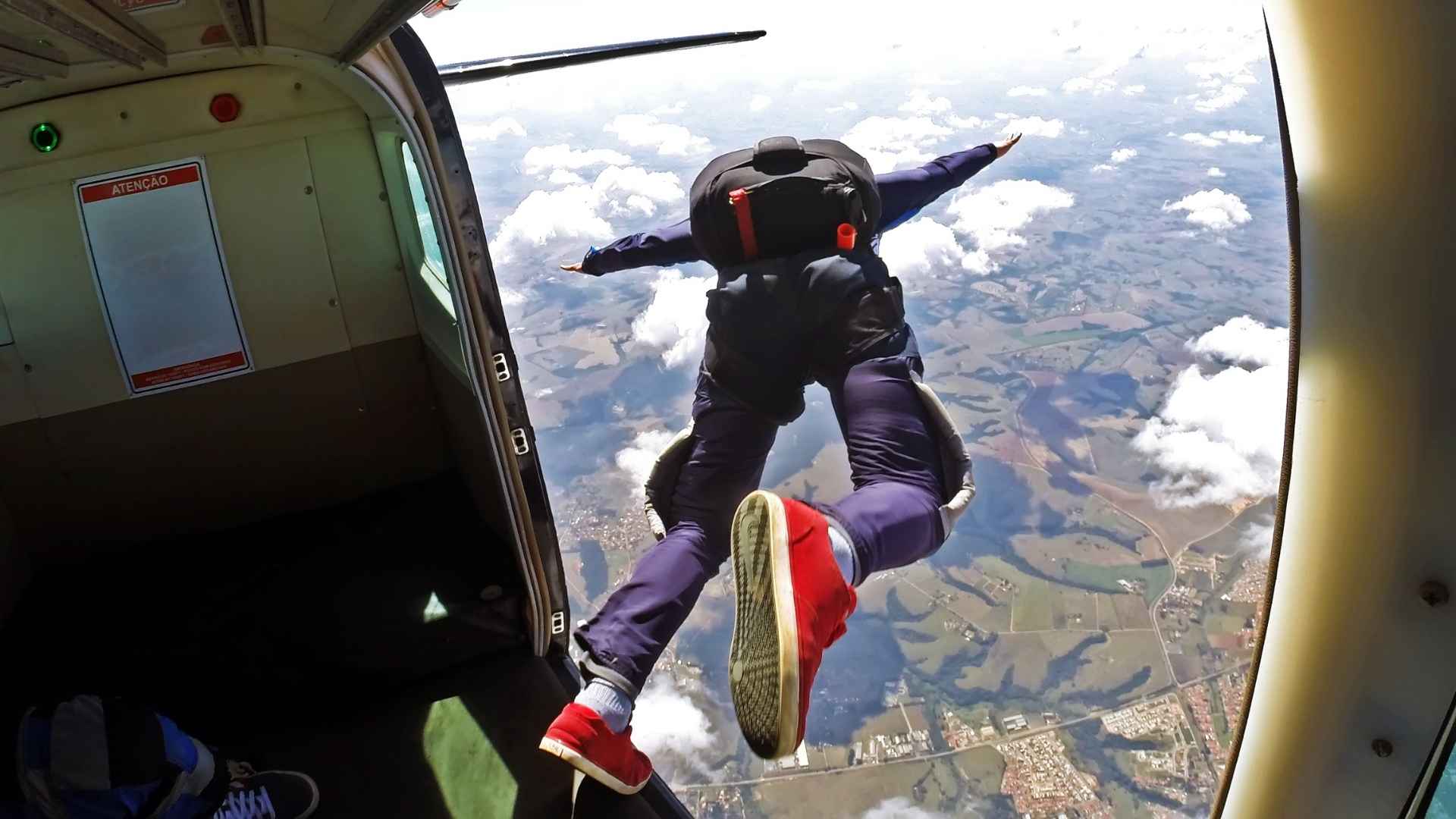
Guides
AFF Course: The Complete 7-Level Path to Becoming a Skydiver
Why choose the AFF Course with Accademia di Paracadutismo? Discover the 7-level path, from theory to your internationally recognized license, with certified instructors and over 20 years of experience.
Read the article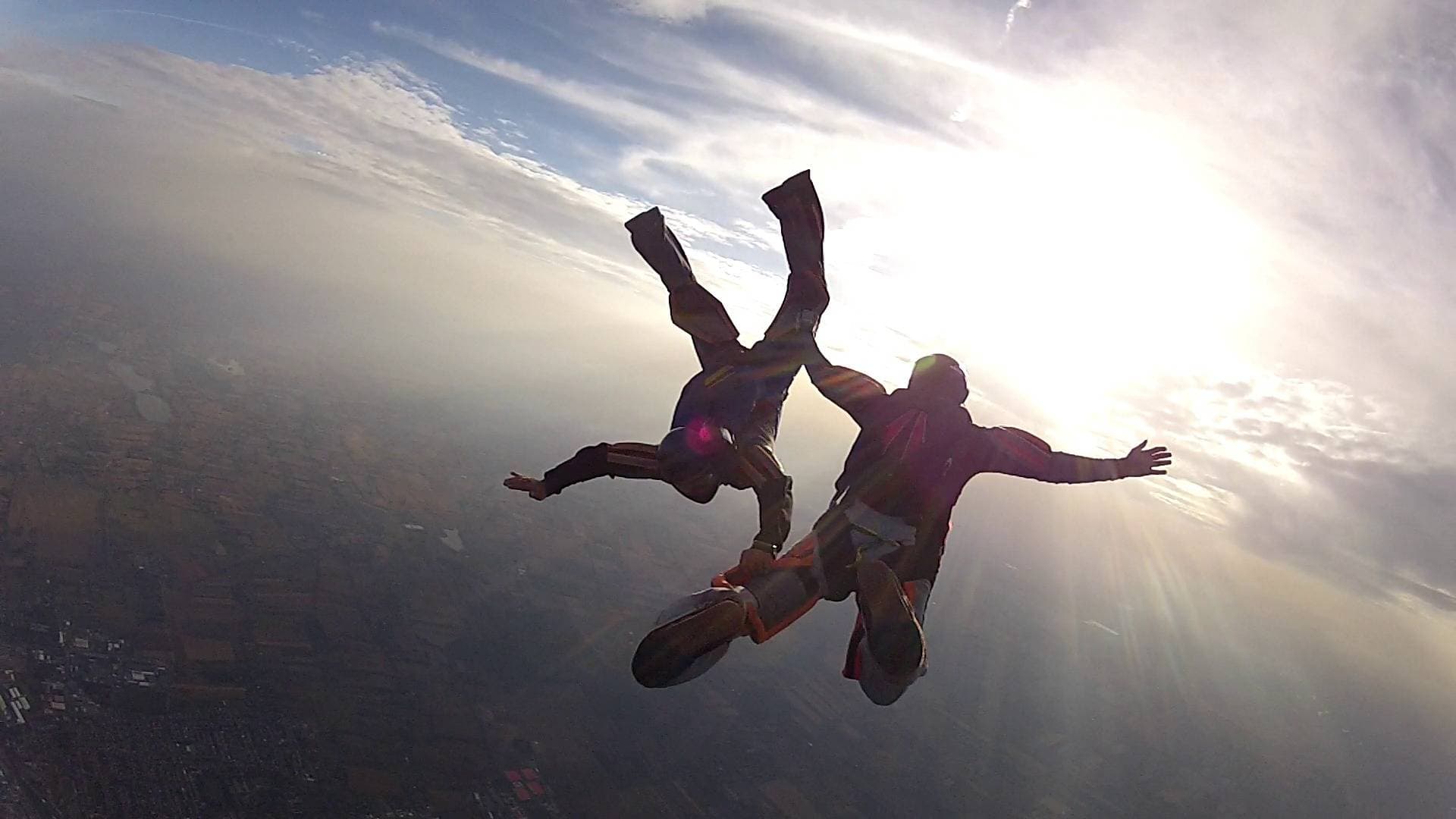
Guides
How to Get Your Skydiving License
Discover how to earn your skydiving license through the AFF Course, an intensive program that prepares you to jump on your own. Accademia di Paracadutismo in Casale Monferrato offers safe training and experienced instructors to make your dream come true.
Read the article