Parachute or paragliding: the differences and how to choose
Published on September 19, 2026 · 5 min read
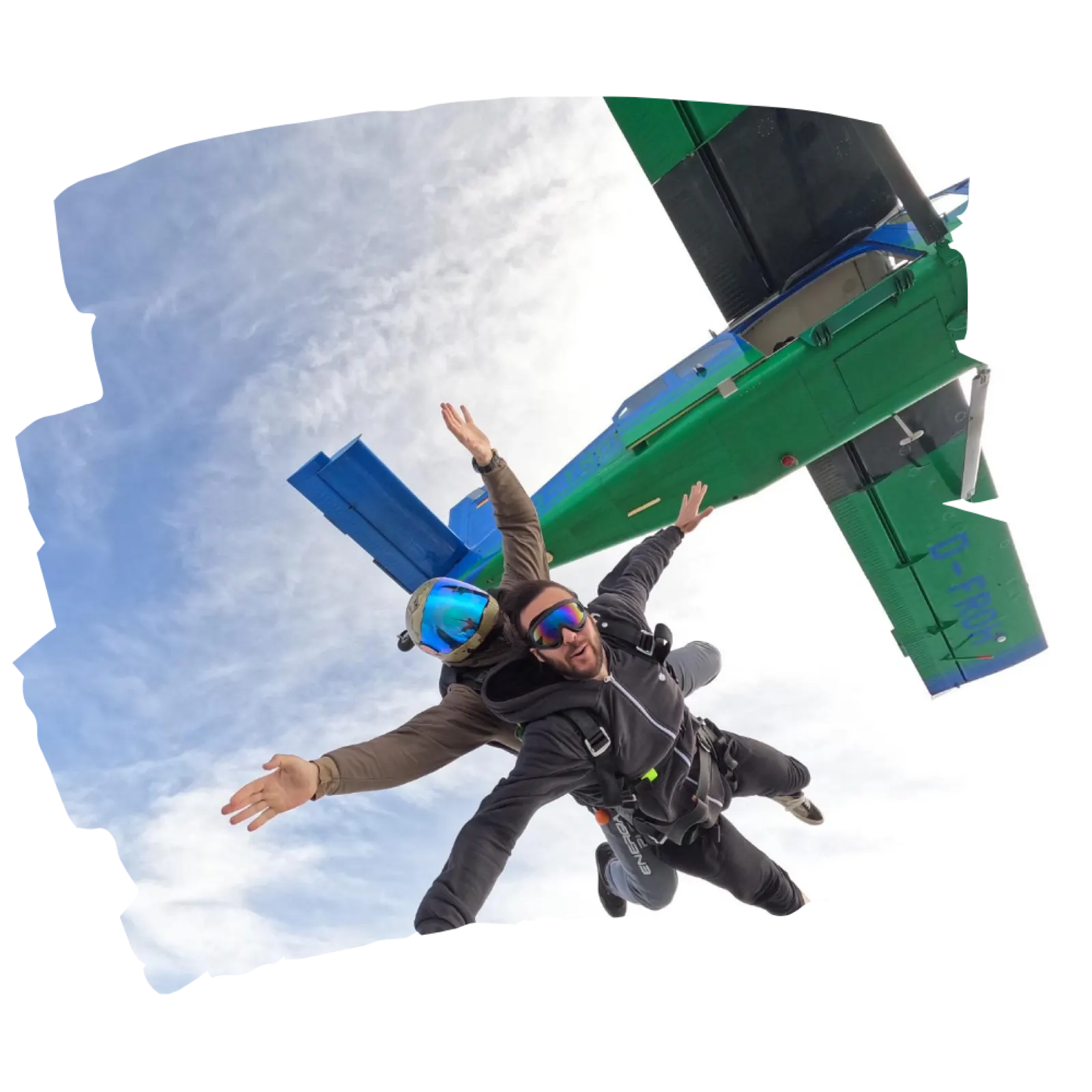
Parachutes and paragliders share the same sky, but they are two different ways of flying: a parachute jump starts from an aircraft and includes free fall, while a paraglider takes off from a slope and glides with the wing already open. Neither one is “better”: the choice depends on what you are looking for. Here are the differences, explained without taking sides.
Cousins, not brothers. Skydiving is speed and focus, paragliding is slowness and contemplation. Let's look at the differences that really matter.
Key points
Ready to jump? Book your tandem with no advance payment.
Book now- A parachute jump starts from the aircraft: first the free fall, then the canopy.
- A paraglider takes off from a slope with the wing already open: gliding flight from the very first second.
- The feeling is different: adrenaline and suspension with a parachute, silence and scenery with a paraglider.
- Both disciplines have a two-seater formula: you can fly with no experience at all.
- A professional is always in control: a tandem instructor or a two-seater pilot.
- The right choice is the one that matches the person living it.
The difference in one line
A parachute takes you to altitude in an aircraft and lets you experience free fall. A paraglider takes off from a slope, with the wing already open, and glides from the very start.
Everything else follows from that difference: the kind of emotion, the rhythm of the flight, the landscape you choose.
The key differences side by side
| Aspect | Parachute (tandem) | Paraglider (two-seater) |
|---|---|---|
| Take-off | From an aircraft, at altitude | From a slope, running with the wing open |
| Highlight | The free fall | The gliding flight, with no fall |
| Feeling | Speed and suspension in the wind | Silence, slowness, the view from above |
| Who flies | The instructor, at every stage | The two-seater pilot |
| Where it happens | A dropzone with an airfield and an aircraft | Hills and mountains with suitable currents |
| Experience needed | None, you jump in tandem | None, you fly as a passenger |
Two different ways of being in the air: free fall on one side, gliding flight on the other.
To decide quickly, think about what you want to remember from that day.
| If you are looking for… | The choice is |
|---|---|
| Free fall and the jump from the aircraft | Tandem skydiving, with 50-60 seconds of free fall |
| A slow, panoramic flight with no fall | Paragliding, with the wing open from the first second |
| A concentrated, intense experience | Tandem skydiving, including the 25-minute climb |
| Time in the air, taking in the landscape | Paragliding |
Sensations compared
A tandem skydive begins with the most intense part: the exit from the aircraft, free fall at around 200 km/h and a feeling of suspension rather than of emptiness. It is a physical experience: you have to live it to understand it.
With a paraglider the rhythm is the opposite: no fall at all, just the wing holding you up and the landscape sliding beneath your feet.
It is the gentlest way to see the mountains, and it rewards those who love to watch more than to feel.
When to choose paragliding
Paragliding is the right choice for a calm, panoramic flight, to stay in the air for a long time, to glide slowly over the hills. In short: you choose it for the flight itself, not for the thrill of the jump.
It also works for anyone who is afraid of falling: in paragliding you never fall.
For a complete picture of the discipline, with its practices and its safety standards, the reference body in Italy is the Federazione Italiana Volo Libero (FIVL).
When to choose a tandem skydive
A parachute is the right choice if you want the “complete” experience: the aircraft climbing, the door, the free fall and the flight under the canopy.
It is the most direct way to understand what it means to fly with your own body. Every stage is described in the tandem skydiving guide.
Two practical points: no experience is needed, because the instructor handles the briefing, the equipment, the opening and the landing. And the system has several layers of safety, with a reserve canopy and an automatic activation device.
The timing is concentrated: about 25 minutes of climb, 50-60 seconds of free fall and 5-10 minutes under the canopy. The intense part is short and powerful; the canopy flight is long and relaxed.
If you are torn between several “extreme” experiences, we have also compared skydiving and bungee jumping and indoor skydiving with a real jump.
How much does skydiving cost compared with paragliding?
The two experiences sit in comparable price ranges, but the comparison has to be made product by product: paragliding offers minutes of gliding, while a tandem jump includes the aircraft, the equipment, the instructor and the free fall.
Practical advice: compare individual offers, not averages. And ask what the price includes, from the briefing to the landing. With us a tandem jump costs 180 € on weekdays and 200 € at the weekend, as shown in our price list.
If free fall is your dream, the answer is a tandem skydive. If you still have doubts, tell us what you are looking for before you get on board.
Frequently asked questions
- What is the main difference between a parachute and a paraglider?
- The way you fly: a parachute means free fall after the jump from the aircraft, while a paraglider takes off from a slope with the wing already open. Duration, sensations and scenery all follow from that.
- Which of the two is better suited to a beginner?
- Both can be done in a two-seater formula, so they are open to anyone who has never flown. In a tandem skydive the instructor handles everything; in paragliding the professional pilot does. The difference is in the sensations, not in the requirements.
- Can you go paragliding with no experience?
- Yes, with a two-seater pilot: take-off and landing are handled by the pilot, exactly as in a tandem skydive.
- Which of the two gives more adrenaline?
- The parachute, because of the free fall at around 200 km/h. Paragliding answers a different need: calm and scenery. Neither is more correct than the other: they are simply different experiences.
Ready for your tandem jump?
Free, flexible booking with no advance payment. Over 400 five-star reviews.
Useful resources
Keep reading
Guides
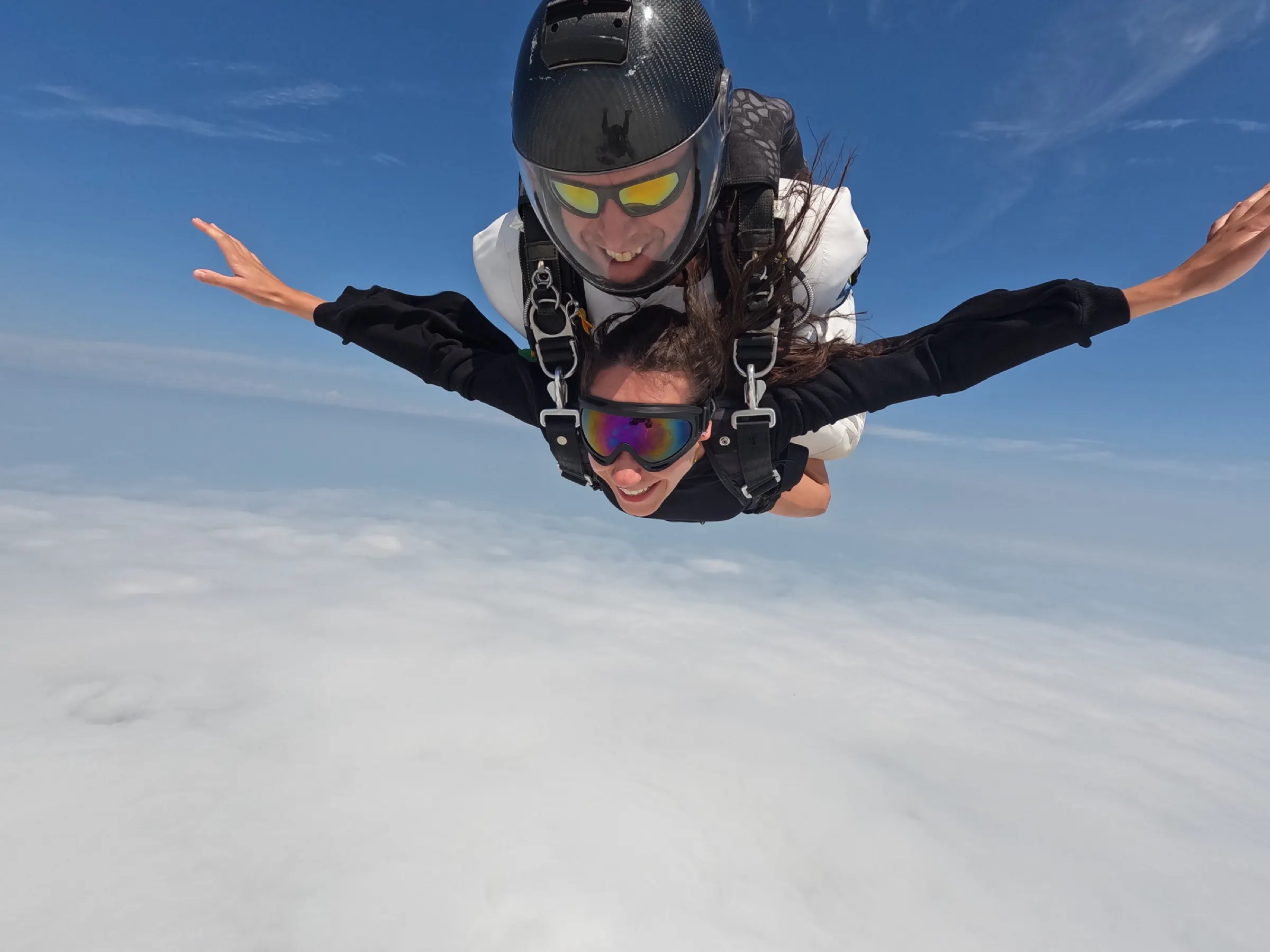
Skydiving with glasses or contact lenses: can you do it?
Prescription glasses or contact lenses? You can jump with either: the protective goggles are worn over your frames.
Read the article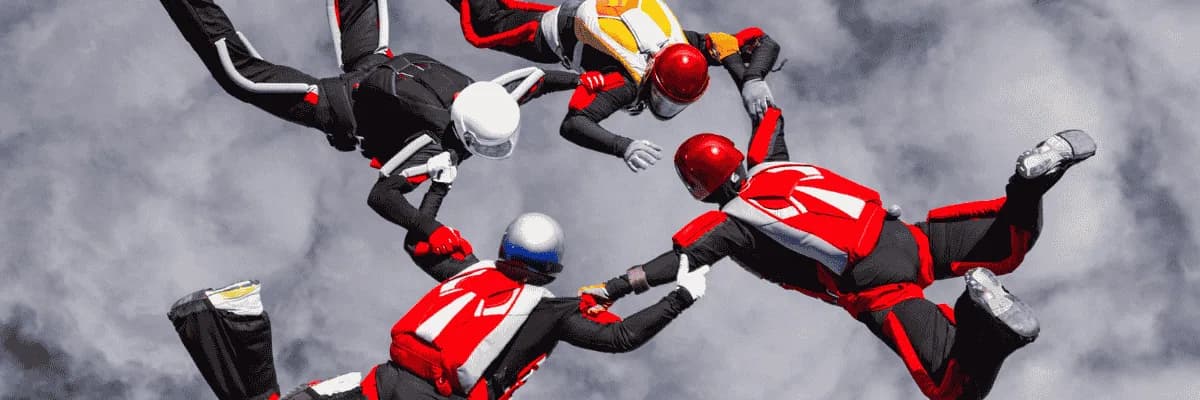
Guides
Group Skydiving and Bachelor/Bachelorette Parties: 2026 Guide
How to organize a group parachute jump: bachelor and bachelorette skydiving parties, corporate team building, and jumps for 4+ people. A complete guide from the Accademia di Paracadutismo in Casale Monferrato.
Read the article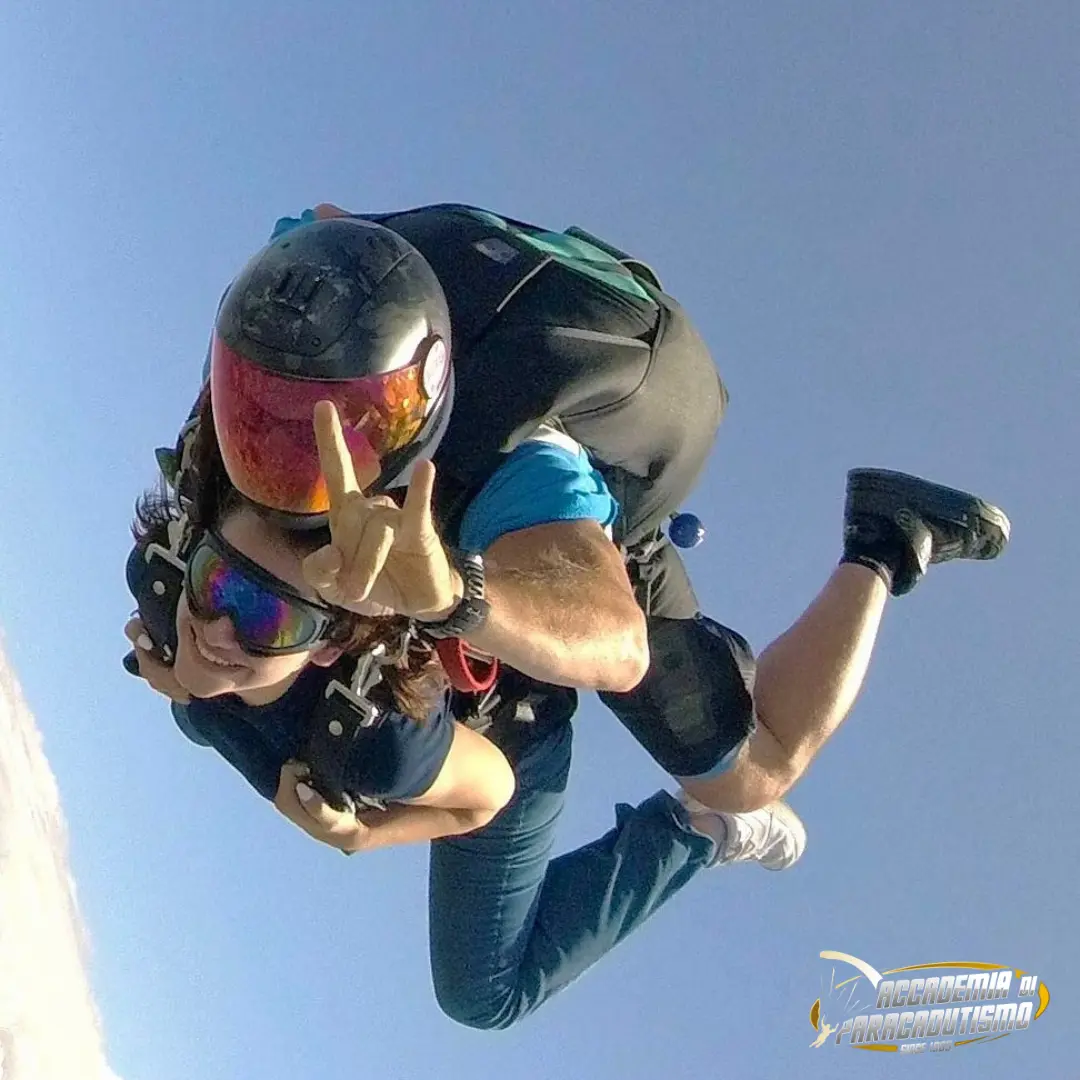
Guides
Skydiving with a Disability: Who Can Jump (2026 Guide)
Skydiving with a disability: find out who can do a tandem jump, how it works for wheelchair users, and what the real medical contraindications to skydiving are. A complete guide from the Accademia di Paracadutismo in Casale Monferrato.
Read the article