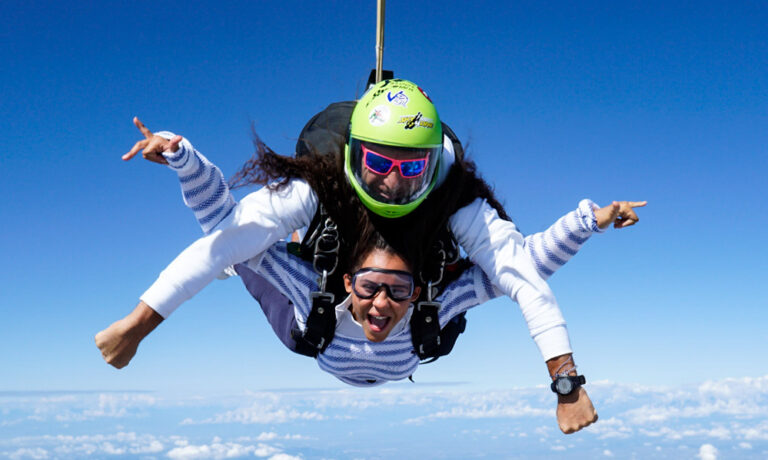


Fear of heights, also known as acrophobia, is one of the most common phobias and can manifest itself in a variety of ways, from simple vertigo to uncontrollable panic. Whether you feel uneasy on a ladder or anxious at the mere thought of looking out of a high window, this guide will provide you with all the information you need to overcome your fear.
What is fear of heights?
Fear of heights, or acrophobia, is a condition characterized by intense anxiety related to situations involving great heights. Sufferers may experience dizziness, a sense of instability, nausea, and even panic attacks. Those who suffer from vertigo often describe sensations of vertigo as feeling as if everything around them is spinning or swaying, creating a strong sense of instability and discomfort.
Often confused with simple vertigo, acrophobia is actually a specific phobia with very specific triggers, typically linked to traumatic experiences or generalized anxiety. Vertigo, on the other hand, represents a broader symptom that can arise from a variety of factors. Causes of vertigo include inner ear problems, neurological disorders, blood pressure problems, or other underlying medical conditions.
It's also important to distinguish between the different types of vertigo: peripheral vertigo, often linked to vestibular disorders, and central vertigo, associated with problems in the central nervous system. This distinction is essential to properly address the problem, as treatments can vary significantly depending on the type and cause of the vertigo.
Why are we afraid of heights?
Historically, this fear had an evolutionary role: it served to protect us from potentially lethal situations. However, in the modern context, it often becomes an obstacle that limits our daily lives and our experiences.
According to recent scientific studies, such as those conducted by Karen Adolph According to the Infant Action Lab at New York University, a fear of heights may not be completely innate. Children gradually develop an awareness of their motor skills, avoiding situations they perceive as risky.
Common symptoms of fear of heights
The most common symptoms include:
- Intense anxiety
- Dizziness and nausea
- Excessive sweating
- Tachycardia
- Panic attacks
How to Eliminate Vertigo and Overcome a Fear of Heights
There are several effective strategies for dealing with and overcoming acrophobia. Here are some of the most recommended:
1. Gradual exposure Start by tackling slightly uncomfortable situations and gradually increase the difficulty. You could start by looking out from a low balcony, then gradually work your way up to higher positions.
2. Positive visualization Use mental visualization to imagine, in detail, successfully navigating high-altitude situations. This helps your brain prepare to react calmly in real situations.
3. Deep breathing Slow, deep breathing helps reduce anxiety by calming the sympathetic nervous system. Practice deep breathing before and during exposure to heights.
4. Relaxation techniques Yoga, meditation, and mindfulness can be extremely helpful in managing anxiety and fear. These techniques teach you to stay calm and centered in stressful situations.
5. Professional support Consult a therapist who specializes in cognitive behavioral therapy (CBT). This form of therapy helps identify and change the distorted thoughts that fuel fear.
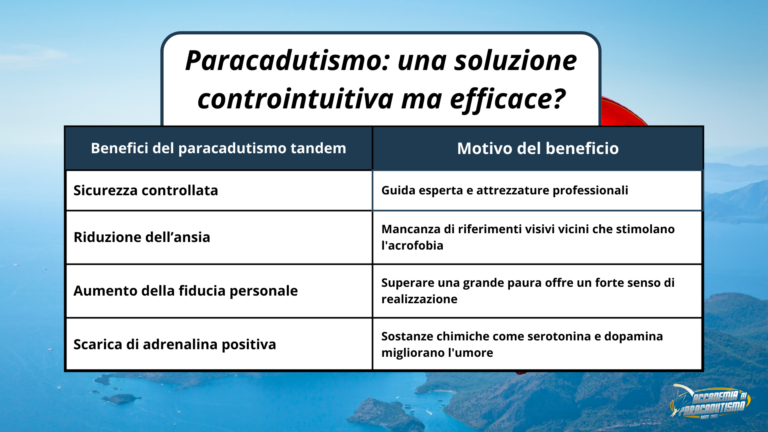
Skydiving: A counterintuitive but effective solution?
Surprisingly, the parachuting Tandem flying can be a great way to overcome a fear of heights. Although it may seem counterintuitive, jumping out of a plane can:
- Offer direct and controlled exposure
- Guarantee safety thanks to the presence of expert instructors
- Stimulate a sense of personal achievement
Differences between vertigo and fear of heights
It is important to clarify that vertigo and acrophobia are not the same thing, although they often coexist.
- Dizziness: sensation of unsteadiness or movement, often related to physical problems such as inner ear disorders.
- Acrofobia: irrational fear of heights, mainly psychological and anxiety-related.
In both cases, addressing the problem gradually and with the help of professionals can offer great benefits.
Overcoming a fear of heights takes time, patience, and often professional support, but it is certainly possible. Using gradual exposure techniques, deep breathing, and visualization, you can significantly reduce the symptoms of fear and vertigo.
If you want to test yourself in a direct and safe way, the parachuting Tandem represents an effective and rewarding challenge that can transform your fear into a personal growth experience.